


Views: 0 Author: Site Editor Publish Time: 2026-05-05 Origin: Site


Scaling thin-wall production requires significant capital expenditure. Standard injection presses often fail in these highly demanding applications. They simply lack the adequate injection speeds and structural rigidity needed to process materials quickly. Equipment selection serves as a direct driver of your unit economics. Misjudging machine parameters often leads to notoriously high scrap rates across production runs. You might experience persistent short shots, excessive flash, or premature mold wear.
Poor equipment choices also bloat energy costs over time, ruining your profitability. This guide provides an evidence-based evaluation framework for buyers. It helps engineering and procurement teams audit equipment specifications effectively. You will learn exactly how to size and specify a dedicated thin wall molding machine. We cover crucial metrics ranging from clamp tonnage multipliers to strict cycle time requirements. By following these precise engineering principles, you can confidently protect your next major capital investment.
Thin-wall parts (wall thickness < 1.0mm or L/T ratio > 150:1) require highly specialized equipment, not just repurposed standard machines.
Injection speed (500–1,500 mm/s) and high injection pressure (~250 MPa) are non-negotiable to beat rapid material freeze-off.
Machine tonnage must include a 1.2x to 1.5x safety margin over standard calculations to counteract extreme internal cavity pressures.
Total cycle times of 2–5 seconds mandate perfectly matched auxiliary equipment for cooling and part extraction.
The industry defines thin-wall molding by specific geometric and flow thresholds. We typically consider parts thin-wall if they feature wall thicknesses strictly under 1.0 mm. You can also measure this using the Flow Length-to-Thickness (L/T) ratio. Any L/T ratio exceeding 150:1 falls into this specialized category. These tight dimensions change the physics of the injection molding process.
You face a core challenge known as the exponential cooling effect. Thin walls offer very little physical volume to retain heat during injection. The polymer melt front freezes rapidly upon contacting the cold mold steel. You must deploy specific equipment architecture to inject material completely before this rapid solidification occurs.
Standard hydraulic presses fail in these extreme applications. They lack the rapid acceleration and precise braking necessary to beat the freezing process. You need a dedicated high speed injection molding machine to succeed. Manufacturers typically design these specialized units as hybrid or fully electric systems. They endure high-stress, sub-5-second production cycles relentlessly without breaking down.
Parameter Comparison Chart: Standard vs. Thin Wall Molding | ||
Parameter Focus | Standard Injection Molding | Thin Wall Molding Setup |
|---|---|---|
Target Injection Speed | 50 - 150 mm/s | 500 - 1,500 mm/s |
Peak Injection Pressure | 100 - 150 MPa | 200 - 250+ MPa |
Typical Cycle Time | 15 - 30 seconds | 2 - 5 seconds |
Thin-wall molding operates as a high-stakes race against material freezing. Your equipment must push viscous plastics into microscopic spaces instantly.
You must rigorously evaluate the machine's true fill rate capabilities. Look for machines reliably capable of achieving 500 mm/s to 1,500 mm/s. The implementation reality proves unforgiving if you compromise on this spec. Slower speeds guarantee short shots because the material freezes before filling the cavity. Many operators try to compensate for slow machines by raising melt temperatures. This creates dangerously high heat profiles. Excessive heat degrades the polymer heavily, causing severe oxidation in nylon or thermal degradation in polypropylene.
Peak pressures often need to reach or exceed 250 MPa in thin-wall applications. The high speed forces the material through tiny gates, creating massive flow resistance.
Evaluation Criteria: Ensure the press can sustain 250 MPa without dropping speed mid-stroke.
Buyer Verification: Audit the machine’s accumulator capacity closely. Ensure the quoted pressure remains maintainable during continuous high-speed operation. Do not accept a theoretical peak rating that plummets after two seconds.
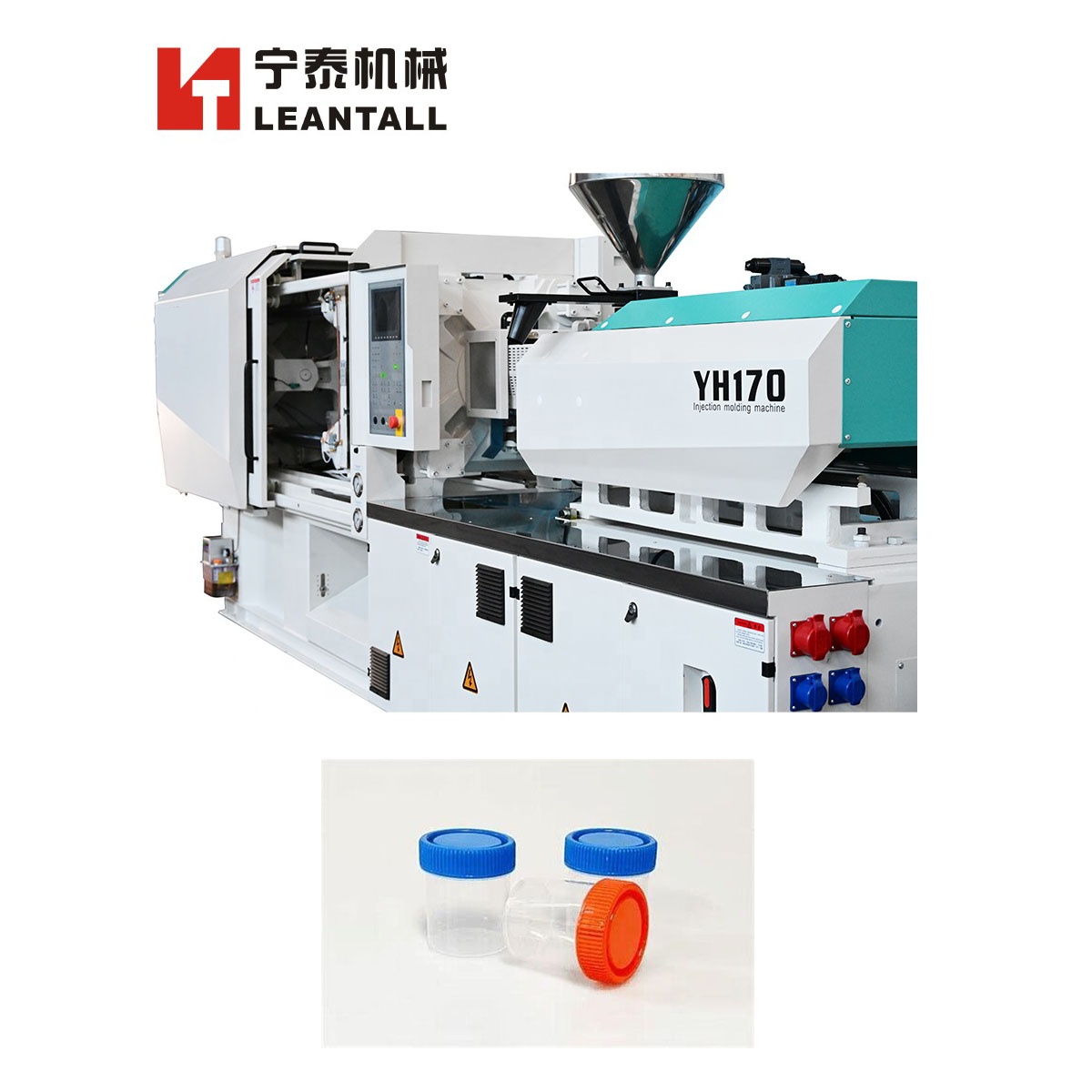
High injection speeds and extreme pressures place immense physical strain on the machine frame. You cannot rely on conventional sizing tables here.
High injection pressures translate directly into high separation forces inside the mold. The machine must clamp the mold shut tightly enough to resist this violent internal expansion. We recommend applying a 1.2x to 1.5x safety multiplier to your standard projected area calculation. This specific multiplier prevents flash defects and protects long-term mold integrity.
You must check the manufacturer's platen deflection limits during your evaluation. High tonnage means nothing if the platens bend under pressure. Even minor deflection causes uneven wall thicknesses across the molded part. Severe deflection easily crushes fragile core pins inside your expensive tooling.
Buyers often fall victim to the misconception that "bigger is always better." This mistake costs money. Oversized machines carry heavy penalties for your bottom line.
They waste roughly 20–35% more electrical energy per cycle to move unnecessarily heavy platens.
They utilize massive barrels. This drastically increases material residence time, leading to polymer degradation.
They slow down the overall cycle, destroying your unit economics.
Your chosen press must physically accommodate your tooling. Thin-wall molds differ structurally from standard tools, requiring careful dimensional verification.
Confirm the clear horizontal and vertical distance between the machine tie bars. Thin-wall molds require incredibly dense cooling channel networks to pull heat away instantly. This extra plumbing makes the external mold dimensions unusually bulky. Ensure the tie-bar spacing comfortably accommodates this extra bulk.
Check the daylight opening specifications carefully. Ensure the machine’s minimum and maximum mold height aligns perfectly with your tooling. If the mold falls outside this range, you face severe installation interference. A mismatched mold height also prevents the toggle system from achieving sufficient locking force.
You must calculate the required opening stroke to guarantee safe part ejection. Use this strict verification formula for your audit:
Opening Stroke (S) > Extraction Distance (H1) + Part/Runner Height (H2) + Safety Margin (5–10 mm).
Failing to verify this equation results in robotic extractors crashing into half-ejected parts.
Matching your part weight to the machine's barrel capacity ensures a stable thermal process. Mis-sizing the barrel creates severe quality defects.
Target machines where your required shot size falls strictly between 20% and 80% of the barrel’s total capacity. Some industry experts recommend maxing out at 85% for high-speed runs. This logic ensures the plastic spends the exact right amount of time melting inside the barrel.
If you drop under 20% utilization, the polymer remains inside the heated barrel too long. This risks severe thermal degradation, chain breakage, and visible burn marks. If you push over 80% utilization, the screw lacks time to melt the plastic evenly. Incomplete homogenization of the melt leads to poor mechanical strength and visual surface defects.
Always remind your team that manufacturers rate machine capacity primarily in Polystyrene (PS). You must use material density conversion factors during your evaluation. If you mold Polypropylene (PP) or Polyethylene (PE), your actual shot capacity drops.
Common Material Density Conversion Factors | ||
Polymer Type | Density Factor (vs. PS) | Impact on Machine Shot Capacity |
|---|---|---|
Polystyrene (PS) | 1.00 (Baseline) | Matches machine spec sheet directly |
Polypropylene (PP) | 0.85 - 0.90 | Reduces actual weight capacity by ~15% |
Polycarbonate (PC) | 1.10 - 1.15 | Increases actual weight capacity safely |
High-speed mechanics mean nothing without a sophisticated brain to control them. Thin-wall processing demands exceptional digital capabilities.
For a demanding 2–5 second cycle, the control system's scan rate must operate in the low millisecond range. The controller must detect microscopic flow front deviations instantly. It must switch from high-velocity injection to holding pressure in less time than it takes to blink. Slow processors cause pressure spikes that flash the mold.
Assess if the machine supports established Scientific Molding principles. The controller must offer seamless integration with internal cavity pressure sensors. Look for real-time defect monitoring dashboards. You need immediate visibility into the process curve to maintain repeatability across thousands of cycles.
A robust controller should help isolate the root causes of common thin-wall defects. For example, it must identify the diesel effect, where trapped air ignites under high pressure and leaves burn marks. It should also track uneven packing pressures to prevent severe part warpage.
Your primary press operates as part of an integrated cell. Even the fastest molding machine bottlenecks immediately if you neglect the surrounding hardware.
Cooling consumes an astounding 60–70% of the total cycle time. The machine must integrate seamlessly with high-capacity chillers. These systems must maintain strict mold temperatures. For example, maintaining a 20–40°C range for thin-wall PP prevents severe sink marks and internal warping.
You cannot rely on gravity drops or human operators for sub-5-second extraction. High-speed side-entry robots or free-fall sorting mechanisms remain absolutely mandatory. The machine’s I/O interface must guarantee zero-latency communication with this auxiliary equipment. Any communication delay ruins the fast cycle time you paid for.
Verify the physical capacity of your dosing and feeding systems. High-volume, fast-cycle production depletes hoppers remarkably quickly. You must demand automated, high-throughput material delivery systems. They prevent the barrel from running dry and causing catastrophic process interruptions.
A successful thin-wall operation requires balancing extreme injection speeds with rigid clamping forces and precise shot sizes. Standard equipment simply cannot survive the exponential cooling effects and extreme internal cavity pressures. You must invest in dedicated hardware built for high-velocity environments.
Take proactive steps before finalizing your equipment purchase. Advise your procurement team to request a fully documented dry-cycle test and an accumulator recovery audit from potential vendors. We strongly recommend running a pilot mold trial, often called a Factory Acceptance Test (FAT). Use the exact high MFR (Melt Flow Rate) resin planned for your actual production. Validate the machine's true capabilities on your own terms before signing off on the capital expenditure.
A: The industry benchmark for thin-wall molding is a Flow Length-to-Thickness (L/T) ratio exceeding 150:1. Some advanced packaging applications push this ratio past 250:1. Higher L/T ratios demand exponentially faster injection speeds to push the polymer through the cavity before the melt front freezes completely. Standard machines cannot achieve these velocities.
A: Excessive heat causes severe thermal degradation. Increasing the melt temperature breaks down polymer chains, weakening the final part physically. Materials like nylon suffer from rapid oxidation. Furthermore, hotter melt requires significantly more cooling time inside the tool. High injection speed provides the true engineered solution to fill cavities without relying on destructive heat.
A: First, determine the total weight of your molded part and runner system. Your total shot size must fall strictly between 20% and 80% of the machine’s maximum barrel capacity. Avoid dropping below 20% to prevent degradation. Always apply a material density conversion factor, as manufacturers rate baseline barrel capacities using standard Polystyrene (PS).
A: Used machines often carry hidden structural wear. High-speed, high-pressure operations degrade older equipment quickly. You risk buying a press with compromised platen parallelism, which causes uneven wall thicknesses and crushes delicate core pins. Worn tie-bars and degraded hydraulic seals fail routinely under the extreme injection pressures required for continuous thin-wall operations.


