


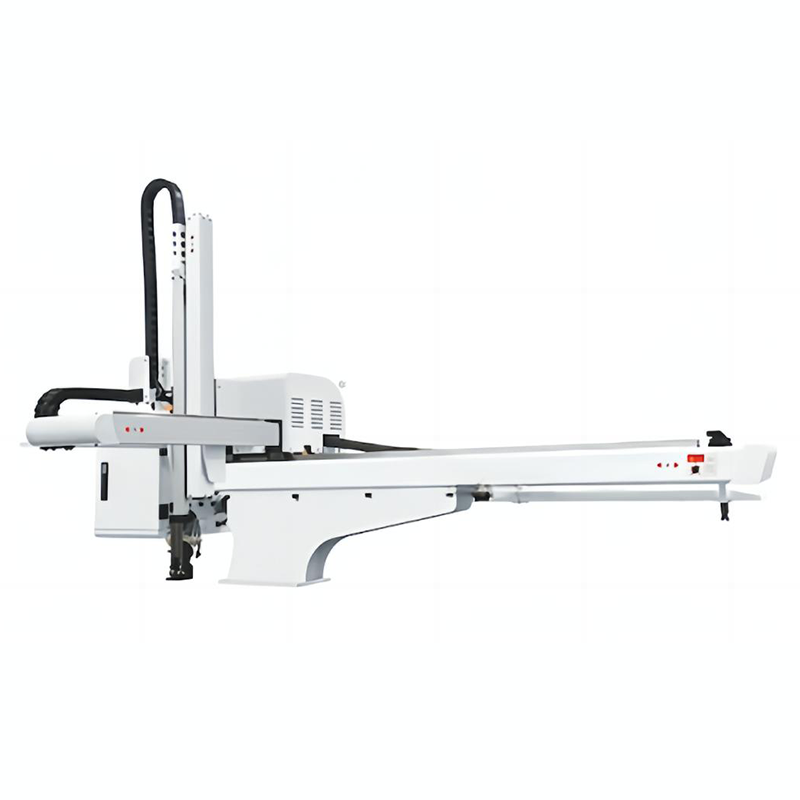
In modern manufacturing, particularly plastic injection molding, the adoption of Robot Arm systems has become increasingly common. But one of the first questions many decision‑makers ask is: “How much will it cost?” The answer is far from trivial. The cost of a Robot Arm depends heavily on its type, capabilities, payload, reach, integration complexity, and the downstream tasks it needs to perform. This article breaks down these variables and gives a comprehensive cost picture, including typical price ranges, cost‑benefit considerations, and trend influences.
Based on data from multiple sources (global suppliers, marketplaces, industrial‑robotics market analyses), here is a breakdown of typical price ranges you can expect when acquiring a Robot Arm for injection molding or industrial automation:
| Category / Type | Typical Price Range (USD) |
|---|---|
| Basic small‑payload injection‑molding robot arm (simple pick‑and‑place, light parts) | ≈ US$ 1,500 – US$ 3,500 |
| Mid‑range robot arms (servo‑driven, 3‑ or more axes, moderate payload 5–15 kg) | ≈ US$ 3,500 – US$ 10,000 |
| Standard full-featured arms for injection‑molding lines (single‑arm, articulated, compatible with many molds) | ≈ US$ 10,000 – US$ 15,000 |
| High‑performance, heavy‑duty industrial robot arms (higher payload, longer reach, advanced control) | ≈ US$ 25,000 – US$ 80,000 (for heavy-duty or palletizing/large‑part handling robots) |
| Specialized or large industrial robots for heavy-duty tasks, complex automation — high‑end | Up to US$ 400,000+ depending on complexity, customization, and added subsystems |
Some lightweight arms (designed for small, simple injection‑molded parts) can cost as little as US$ 1,500–2,000.
For a balanced combination of performance and cost — often a good fit for many plastic‑part producers — the US$ 4,000–10,000 range is common.
For more demanding workloads — larger molds, heavier parts, more demanding cycle times — investing US$ 10,000–15,000 per Robot Arm is typical.
For automation beyond molding — such as palletizing, heavy‑part handling, multi‑station production, or long‑reach/capacity robots — the cost climbs significantly, often into the tens or hundreds of thousands.
These ranges reflect base cost of the robot itself; additional costs (installation, tooling, integration with molding machines, software, maintenance, end-of-arm tools, safety systems) often add non-trivial overhead.
When manufacturers evaluate robotic automation for injection molding, they often compare specific configurations. Two common categories in injection molding are Swing Single Arm Robot and Swing Double Arm Robot. Understanding the cost differential helps choose the right solution.
Swing Single Arm Robot: A robot with a single arm that swings into the mold area to pick parts or runners, then swings out to deposit them. Often used for simple injection molding lines, sprue/runners removal, small-to-medium parts. Such robots are typically lightweight, cost-effective, and easier to install.
Swing Double Arm Robot: Involves two arms — one may handle part ejection while the other handles runner removal or placement. This configuration can increase throughput by enabling parallel tasks (e.g., while one arm picks up a completed part, the other removes the runner) — useful when cycle times are short or output volume is high. Many advanced molding factories use double-arm robots for efficiency.
| Robot Type | Typical Use Case | Approx. Cost* | Pros | Cons |
|---|---|---|---|---|
| Swing Single Arm Robot | Simple molding lines, light parts, entry-level automation | Lower end of price range (≈ US$ 1,500–5,000) | Low cost, easy installation, sufficient for low-to-mid volume, small molds | Slower throughput; limited to one arm — might be bottleneck for high-volume production |
| Swing Double Arm Robot | High-volume molding lines, medium complexity, need for higher throughput | Higher — often mid to upper range (≈ US$ 8,000–15,000+) depending on payload/reach | Higher throughput, parallel handling (sprue + part), better for heavy or complex parts | Higher upfront cost, more complex integration, tooling and maintenance more demanding |
| General / Articulated / Heavy-Duty Robot Arm | Larger molds, heavier parts, complex automation, multi‑process lines | Mid to high range (≈ US$ 10,000 up to US$ 80,000+, or more) | Versatile, high payload & reach, supports integrated automation (take‑out, trimming, packaging…) | High capital cost, need for skilled setup, integration complexity |
*Cost values refer to approximate purchase price; total implementation cost may be higher after integration, tooling, and ancillary equipment.
Complexity of the robot: Double‑arm robots or heavy-duty articulated arms involve more mechanical components — arms, joints, control systems — which increases cost.
Payload and reach requirements: Higher payloads (for heavier parts) or longer reach (for large molds or deep cavities) demand stronger actuators, sturdier frames, and more powerful drive systems, which drive up cost.
Cycle speed and precision: Faster cycle times and tighter repeatability (for high-precision molding or high-speed lines) often require servo drives, better control systems, and more robust build quality.
Integration and tooling: End-of-arm tooling (grippers, sprue pickers, suction cups), safety guards, sensors, programming and mounting interface to injection molding machines — these components add to total cost.
Support, maintenance, and after‑sales: For heavy-duty or dual-arm systems, maintenance cost (and possibly spare parts) tends to be higher, as does the need for skilled technicians.
For a small or medium factory focusing on light- to mid-sized plastic parts, a Swing Single Arm Robot may be cost‑effective and sufficient. For high-volume production or more complex parts (or when integrating with downstream trimming, packaging, or assembly), a Swing Double Arm or full-featured robot arm may justify higher cost through improved throughput and lower labor dependency.
When considering the cost of a Robot Arm, purchase price is only the beginning. Manufacturers should evaluate Total Cost of Ownership (TCO), including ongoing costs and benefits over time. Key factors include:
Installation & Integration: Adapting the robot to work with existing injection molding machines, mounting plates, safety enclosures, conveyor belts or downstream equipment. This may involve mechanical, electrical, and control‑system work.
End-of-Arm Tooling (EOAT): Custom grippers, sprue pickers, vacuum cups, sensors — often needed per part geometry — add to cost.
Programming & Setup: Initial program development for part removal, handling, timing sync with mold cycles; possible reprogramming when molds or parts change.
Maintenance & Spare Parts: Regular maintenance, lubrication, replacement of wear parts (seals, bearings), possible downtime. For heavy-duty or dual-arm robots, maintenance cost can be significant.
Training & Labor for Supervision: While robots reduce manual labor, skilled staff are still needed to supervise, maintain, and program the systems.
Utilities and Energy Consumption: Especially for servo-driven, high-payload, high-speed robots, electricity costs should be considered.
Labor Cost Reduction: Robots replace manual operators for part removal, handling, sprue trimming, etc. Over time, savings on wages, benefits, overtime, and labor downturns.
Increased Throughput & Productivity: Faster cycle times, 24/7 operation potential (lights-out), reduced downtime between cycles — leading to higher output.
Quality and Waste Reduction: Consistent, precise handling reduces defects, rejects, and material waste, which lowers cost per good part.
Safety & Reduced Injury Costs: Automating hazardous tasks (hot moulds, repetitive lifting) reduces risk of worker injury and associated downtime or liability.
Flexibility & Scalability: Once installed, robot arms can often be repurposed for different molds or products — spreading cost over many production runs.
Many industry analyses indicate that while the up‑front cost can be substantial, the payback period can be relatively short — particularly for medium-to-high volume production lines with stable workflows.
Understanding current price levels and market trends helps contextualize the cost numbers above. As of 2025:
Some sources state that typical robot arm prices start around US$ 5,000, but depending on features, size, payload and sophistication, total costs can reach US$ 400,000+.
Another estimate suggests many palletizing or heavy‑duty robots (payloads of 20–80 kg, reach up to ~2.2 m) are in the US$ 70,000–85,000 range.
For injection molding specific robots, swing-arm robots remain popular due to lower cost, simplicity, and sufficient capabilities for typical plastic parts — reinforcing the value for small-to-mid injection molding shops.
Furthermore, as manufacturing becomes more automated and competition intensifies, the return on robot investment becomes more attractive — especially when integrated with high-output molding lines, quality control systems, and downstream automation (e.g., packaging, palletizing).
Because your background involves injection molding, composite gas cylinders, and plastic packaging, investing in appropriately spec'd Robot Arms (even Swing‑Arm or Double‑Arm types) could significantly reduce labor costs, increase throughput, and improve safety — particularly for heavy or repetitive jobs.
If you're considering buying Robot Arms for your injection molding line or plastic manufacturing facility, here is a recommended decision framework:
What are the typical part sizes, weights, and cycle times?
Do you need simple pick‑and‑place, or additional functions (sprue removal, trimming, packaging)?
What is your expected production volume (low, medium, high)?
Are you producing many SKUs or mostly stable products?
For small/light parts and modest production: consider Swing Single Arm Robot.
For higher throughput or sprue/part parallel handling: consider Swing Double Arm Robot.
For heavy parts, large molds, or multi‑process lines: evaluate more robust articulated or heavy-duty Robot Arms.
Base price (robot) + EOAT + integration + installation + programming + maintenance + energy + training.
Compare vs current labor cost, defect/waste rate, throughput, and potential output gains.
Calculate labor savings (per part or per shift), increased throughput (parts/hour), reduced defect/waste costs, and safety benefits.
Estimate how many months/years until robot investment is recouped.
Ensure the robot chosen allows for tooling changes or reprogramming if product mix changes.
Ensure maintenance and spare-parts availability, especially for servo‑driven or heavy-duty robots.
Train staff for programming, maintenance, troubleshooting.
For example: if your plant runs 2 shifts, does 100,000 parts/month, and you can reduce manual labor by 2 workers while increasing yield by 5% — a mid‑range robot costing US$ 10,000–15,000 may pay back in less than a year.
While Robot Arms often justify their price, there are scenarios where they might not be cost‑effective:
Very low-volume production or frequent mold changes: The cost of integration and re‑configuration may outweigh benefits.
Parts are extremely small or require delicate manual handling: In some cases, human dexterity may outperform current robotic tooling.
Product mix changes constantly and unpredictably: Frequent reprogramming and tooling swaps can incur high overhead.
Capital constraints or low labor cost environment: If labor is cheap and demand is low, ROI may be too long.
In such cases, semi‑automatic solutions, manual labor, or small-scale automation might remain more cost‑effective — at least until production volume or complexity increases.
The cost of a Robot Arm for injection molding and industrial automation spans a wide range — from ~US$ 1,500 for basic light-duty arms to US$ 80,000+ for heavy-duty or high-capacity robots, and potentially US$ 400,000+ for highly specialized systems.
Swing Single Arm Robot and Swing Double Arm Robot are common configurations for plastic injection molding; single-arm robots offer low cost and simplicity, while double-arm designs deliver higher throughput at higher upfront cost.
Total cost of ownership (purchase + tooling + integration + maintenance) is a critical metric — not just the sticker price. When correctly specified, Robot Arms can deliver a compelling ROI by reducing labor costs, boosting throughput, cutting defects, and improving safety.
For many manufacturing operations — particularly medium-to-large plastic product lines, heavy-duty applications, or high-volume production — investing in Robot Arms has moved from optional to essential.
Given your background in injection molding, plastic composite products, and emphasis on automation in manufacturing — evaluating Robot Arms (especially mid-range or swing-arm types) could be a strategic move to optimize your production line, reduce costs, and improve quality.
Q1. What influences the final cost of a Robot Arm besides its base price?
Final cost is influenced by end-of-arm tooling (EOAT), integration with existing injection molding machines, installation, programming, maintenance, energy use, and operator training.
Q2. For a small injection molding workshop producing light parts, is a Swing Single Arm Robot sufficient?
Yes — for small parts and low-to-medium production volumes, Swing Single Arm Robots (often costing US$ 1,500–5,000) can be a cost‑effective automation solution.
Q3. When does it make sense to invest in a Swing Double Arm Robot rather than a Single Arm Robot?
If production volume is high, cycle times are short, or you need parallel tasks (e.g., part removal + sprue/runners removal), a Swing Double Arm Robot may improve throughput and justify the higher investment.
Q4. How does robot arm cost compare to manual labor cost over time?
Although a Robot Arm requires upfront investment, over time — especially for high-volume production — savings from reduced labor, increased output, lower defects, and less waste can lead to a payback period of months to a few years.
Q5. Is it always cost-effective to automate injection molding with a Robot Arm?
Not always. For very low-volume production, frequent mold changes, small-scale batches, or when labor is inexpensive, the cost and complexity of automation may not justify the investment.


