


Views: 0 Author: Site Editor Publish Time: 2025-11-27 Origin: Site


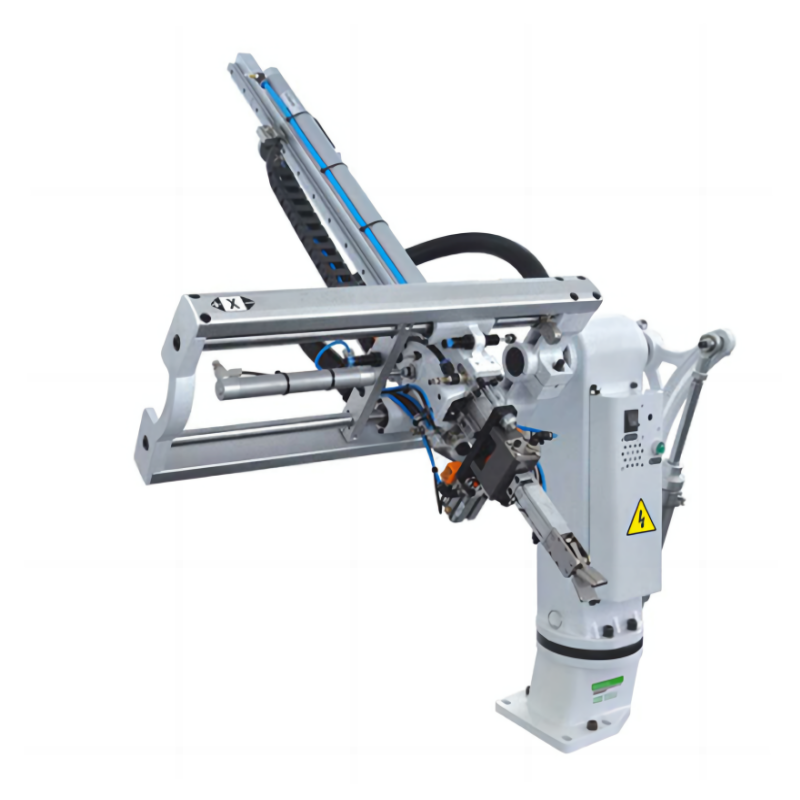
A manipulator arm is a mechanical device — often part of a larger robot — designed to handle, move, or manipulate objects within a workspace. In robotics, a manipulator arm consists of a series of rigid segments (links) connected by joints, which can rotate or slide, allowing complex motion and positioning of an “end effector” (e.g., a gripper, vacuum suction, or tool).
In essence, a manipulator arm is what gives a robot its “hand and arm”: it is the physical structure that executes tasks such as picking up, placing, lifting, orienting, or otherwise manipulating objects. Because of its pivotal role, in many industrial contexts, the terms manipulator arm and robot arm are used almost interchangeably.
In manufacturing sectors — especially those relying on injection molding machines and similar automation — the manipulator arm is critical to automating operations that would otherwise require manual labor. This makes manipulator arms foundational technology for modern industrial automation.
To fully understand what a manipulator arm is, it helps to examine its structure, types, and how different designs suit different applications.
A manipulator arm is composed of links (rigid segments) connected by joints — each joint allows motion (rotational or linear), enabling the arm to reach different positions within a workspace.
The terminus of the kinematic chain is called the end effector — analogous to a human hand. The end effector can be a gripper, suction cup, tool, or any device suited for the task (e.g., pick‑and‑place, welding, inserting, lifting).
The manipulator’s joints and links define how many degrees of freedom (DOF) it has — often 4, 5, 6 or more — which determines how flexibly and precisely it can position and orient the end effector.
Because no single manipulator design fits all tasks, there are many types. The type chosen depends on the required motion, workspace geometry, speed, precision, payload, and application.
Here are the most common types:
| Manipulator Type | Description & Key Features | Typical Use Cases |
|---|---|---|
| Articulated (Serial) Robot Arm | Links connected by rotary joints; resembles a human arm (shoulder, elbow, wrist). Often 6‑axis or more. High flexibility, wide workspace. | General‑purpose tasks: pick‑and‑place, assembly, injection molding part handling, welding, etc. |
| SCARA (Selective Compliance Assembly Robot Arm) | Two parallel rotary joints for X-Y planar motion, plus vertical motion; relatively rigid in Z direction. Good for precise lateral motions. | Assembly, pick‑and‑place, repetitive tasks with moderate complexity and high speed. |
| Cartesian (Gantry / Linear) Manipulator | Moves linearly along X, Y, Z axes (prismatic joints). Work envelope is rectangular. High precision, good for tasks requiring linear movement. | CNC machines, 3D printing, pick‑and‑place, tasks demanding high precision in linear motion. |
| Cylindrical Manipulator | Combines rotary base motion and linear vertical/horizontal extension. Good for tasks involving vertical reach and rotation. | Machine tending, injection molding part extraction, material handling in constrained spaces. |
| Parallel / Delta Manipulator | Several linkages operate in parallel to support one end effector platform; often rigid and fast. | High‑speed pick‑and‑place, packaging, electronics assembly, where speed and precision are critical but workspace is limited. |
“A manipulator is a robotic arm that interacts with the environment. It's not just an add‑on; it’s what gives a robot its purpose.”
In many industrial robots, the manipulator arm is the central component enabling automation — without it, the concept of a robot doing useful work in manufacturing would be impossible.
Because terminology can vary, it’s useful to clarify how “manipulator arm” relates to “industrial robot” or “robot arm.”
A manipulator arm refers to the mechanical structure (links, joints, end effector) that performs the physical manipulation of objects.
An industrial robot is a broader concept: a programmable machine — often including a manipulator arm — that performs work automatically under control, sometimes with AI or advanced logic.
Therefore, a manipulator arm may be part of an industrial robot, but an industrial robot can include more than just the manipulator (e.g., control system, sensors, mobility, logic).
In many contexts (especially industrial automation), “manipulator arm,” “robot arm,” and “robotic manipulator” are used interchangeably — referring to the portion of the robot that moves and manipulates objects.
Thus, when someone asks “What is a manipulator arm?”, they are typically referring to the core mechanical component that enables a robot to perform tasks.
Manipulator arms find countless applications across industries. One of the most prominent and growing is in plastic manufacturing — especially usage with injection molding machines.
In plastic manufacturing, manipulator arms (i.e., robot arms) are often mounted next to or on injection molding machines. Their roles include:
Removing molded parts: Once the part is molded and ejected, the manipulator arm picks up the finished part.
Placing parts onto conveyors or pallets: After picking, the arm moves the parts to a conveyor belt or palletizer for further processing or packing.
Trimming, finishing, or part handling: Some manipulator arms are equipped with end-of-arm tools to perform secondary operations — e.g., remove sprues, trim, quality inspection, etc.
Handling heavy, hot, or hazardous parts: Plastic parts directly after molding may be hot or require immediate handling; manipulator arms reduce human exposure to these hazards.
Because manipulator arms can move with precision, speed, and repeatability, they are ideal for the repetitive and high‑throughput nature of injection molding production.
Beyond injection molding, manipulator arms are heavily used in:
Assembly and manufacturing — automotive assembly, electronics, machinery.
Material handling and pick‑and‑place tasks — packaging, palletizing, warehousing.
Metalworking, welding, CNC machining, finishing — tasks involving heavy parts, repetitive motion, or high precision.
Hazardous or inaccessible environments — e.g., handling radioactive or biohazardous materials, or tasks in confined spaces.
Collaborative robotics and flexible automation — especially with more affordable and safe manipulators, to work alongside humans in mixed environments.
Using manipulator arms brings many advantages. Below is an analysis of the most important benefits, especially when applied to injection molding and broader manufacturing.
High Precision and Consistent Repetition
Manipulator arms provide consistent, repeatable motion cycle after cycle. This results in stable output quality, minimal variation, and tighter tolerances — critical for high‑precision parts.
Increased Productivity & Throughput
Robots don’t require breaks — manipulator arms can operate continuously, making them ideal for high‑volume production and 24/7 manufacturing.
Reduced Labor Dependency & Cost Savings
By automating repetitive or labor‑intensive tasks, manipulator arms reduce the reliance on manual labor. That helps address labor shortages, reduce wages and benefits costs, and lower human error.
Improved Safety and Ergonomics
Robots can handle heavy, hot, sharp, or otherwise hazardous parts — reducing risk of injury for workers. Manipulator arms also prevent repetitive-strain injuries by taking over monotonous tasks.
Flexibility and Versatility
Depending on the end effector and programming, manipulator arms can perform a wide range of tasks — from simple pick‑and‑place to complex multi-step operations (assembly, finishing, packaging).
Scalability and Integration with Automated Systems
Manipulator arms integrate seamlessly with modern manufacturing lines — especially when paired with injection molding machines or other automated equipment — enabling synchronized, streamlined production.
Here is a simplified comparison between traditional manual handling and using manipulator arms in a manufacturing (e.g., injection molding) context:
| Metric / Factor | Manual Handling | Using Manipulator Arm (Robot Arm) |
|---|---|---|
| Precision & consistency | Poor to moderate — human variability | High — repeatable, millimeter-level accuracy |
| Throughput / Cycle speed | Limited by human speed & fatigue | High — fast, consistent cycles, 24/7 potential |
| Labor cost & human resources | Ongoing cost; need for skilled/unskilled labor | Once‑time (robot) investment; fewer operators needed |
| Safety / Risk | Higher — exposure to hot molds, repetitive stress | Lower — robot handles dangerous, heavy, hot parts |
| Flexibility for different tasks | Moderate — changeover labor intensive | High — reprogram, change end effector for new tasks |
| Quality and defect rate | Higher variability, more defects | Lower defect rates, consistent quality |
Given these advantages, manipulator arms offer compelling value — especially for medium-to-high volume production, strict quality control, or hazardous work environments.
As industrial automation advances, manipulator arms are evolving beyond simple pick‑and‑place mechanics. Below are some of the key trends shaping the future of manipulator arms:
Modern manipulator arms are increasingly integrated with sensors, vision systems, AI control, and data feedback loops. This allows for real‑time quality inspection, adaptive motion, and predictive maintenance — raising the sophistication and reliability of automated production lines.
Not all manipulator arms need to operate in isolation or fenced zones. Collaborative robot arms are designed to work safely alongside humans, enabling more flexible, mixed‑human/computer workflows, especially useful for small-to-medium enterprises or custom jobs.
Contemporary manipulator arms are not limited to single tasks. By changing the end effector — gripper, suction, trimming tool, sensor — the same arm can perform part removal, sprue/trimmer removal, assembly, packing, inspection, even recycling or material sorting. This multi-functionality makes them powerful assets for modern, high-efficiency manufacturing.
As industries like automotive, electronics, and medical devices require increasingly tight tolerances and cleanliness (e.g., medical-grade plastics, electronics housings), manipulator arms are becoming indispensable to meet quality, repeatability, and safety standards.
With rising labor costs, labor shortages, and increased demand for efficiency, manufacturers worldwide are adopting manipulator arms to stay competitive, reduce costs, and maintain stable production.
Given your background (working with injection molding, injection molding machines, and automation), understanding how manipulator arms integrate with injection molding machines is especially relevant.
When an injection molding machine completes the molding cycle and ejects a part, a manipulator arm / robot arm can immediately take over — picking up the part, removing runners/sprues, placing the part on a conveyor or pallet, or sending it for post‑processing.
This automation reduces cycle downtime — because there is no need to wait for human operators to manually remove parts. The manipulator arm synchronizes with the molding machine cycles to ensure smooth throughput.
For high‑volume or heavy‑duty molding, manipulator arms enable continuous, stable operations, increasing productivity while reducing labor cost and human error.
Higher Output & Lower Cycle Time — robot arms speed up part removal and handling, accelerating the overall molding cycle.
Better Quality & Fewer Defects — precise, repeatable handling minimizes damage to parts, ensures consistent placement, and reduces scrap or rejects.
Improved Safety & Hygiene — reduces human contact with hot molds or freshly molded parts (which may still be hot or toxic), enhancing worker safety and cleanliness — critical in medical or food‑grade plastic production.
Flexibility for Multiple Products / SKUs — by reprogramming or changing end effectors, the same manipulator arm can handle different part geometries, sizes, or processes — fitting well with mixed‑product lines.
Given your professional context — working for companies involved in injection molding, plastics, composite gas cylinders, and so on — integrating manipulator arms with injection molding machines is directly aligned with optimizing production efficiency, reducing waste, and improving quality.
While manipulator arms bring enormous benefits, effective implementation requires careful consideration. Below are key factors to evaluate.
Workspace & Geometry — depending on part geometry, size, and placement, different manipulator types (SCARA, articulated, Cartesian, cylindrical) may be more suitable. For injection molding, where parts are ejected and need to be picked and placed, articulated or Cartesian types are common.
Payload & End Effector — parts may vary in weight, shape, or surface. The manipulator must support appropriate payload and have suitable end‑of‑arm tooling (grippers, suction, custom fixtures).
Integration with Injection Molding Machine Control — synchronization between the molding machine and the manipulator arm is critical to avoid collisions, minimize downtime, and ensure smooth cycles.
Flexibility vs. Specialization — for high-mix, low-volume production, flexibility (easy reprogramming, quick tool changes) matters; for high-volume repetitive production, robustness and speed may be prioritized.
Maintenance, Reliability, and Safety — proper calibration, maintenance, and safety measures (collision detection, safeguard zones) are needed to ensure long-term reliability and operator safety.
Initial Investment Cost — purchasing manipulator arms and integrating them into molding lines requires capital. Compared to manual labor, ROI must be evaluated based on volume, labor cost, and production demands.
Programming and Setup Complexity — properly programming motion paths, synchronizing with molding machines, selecting correct end effectors, setup for new SKUs can be complex and may require skilled engineers.
Load Capacity and Wear — depending on the design (e.g., serial manipulator), load capacity may be limited; overloading or high-duty usage may introduce wear or reduce precision.
Flexibility Limitations — while many manipulator arms are adaptable, some specialized or heavy-duty molding applications may require custom tooling or special robots.
Hence, when deploying manipulator arms, manufacturers should conduct a comprehensive evaluation — balancing cost, benefit, flexibility, and long-term maintenance.
As manufacturing enters the era of smart factories, digitalization, and high standards for quality, safety, and efficiency, manipulator arms have become central enablers of modern production.
Automation & Productivity Gains — manipulator arms enable manufacturers to scale production, reduce labor dependency, lower costs, and increase output — especially important in high-volume sectors like automotive, plastics, consumer goods.
Quality Assurance & Consistency — consistent, precise, and repeatable operations guarantee product quality, reduce defects, and ensure compliance with tight tolerances and standards (e.g., for medical, electronics, or automotive parts).
Safety and Worker Health — by removing humans from hazardous tasks (hot molds, heavy parts, repetitive motions), manipulator arms protect workers and reduce workplace injuries.
Flexibility for Customization & Variety — as markets demand more diversified products, quick turnarounds, and small-batch production, manipulator arms offer flexibility: reprogramming, tooling changes, and multi‑task capability.
Integration with Smart Systems — manipulator arms can be part of a broader automated ecosystem: connected to injection molding machines, conveyors, inspection systems, data logging, predictive maintenance — realizing the vision of Industry 4.0.
Sustainability and Waste Reduction — by minimizing handling errors, reducing scrap, and improving efficiency, manipulator arms contribute to more sustainable manufacturing practices.
Given these factors, manipulator arms are not a luxury — they are becoming a necessity for manufacturers aiming to remain competitive, scalable, and compliant with modern standards.
Q1. What’s the difference between a “manipulator arm” and a “robotic arm”?
Although often used interchangeably, a “manipulator arm” refers specifically to the mechanical arm structure (links + joints + end effector) that manipulates objects. A “robotic arm” may refer to the manipulator arm itself or to a larger robotic system — but in most industrial contexts, they are effectively the same.
Q2. Can a manipulator arm be used with any injection molding machine?
Yes — most manipulator arms are designed to integrate with standard injection molding machines. But proper selection is necessary (appropriate payload, reach, end‑effector, synchronization) to ensure compatibility and effective operation.
Q3. Are manipulator arms only useful for simple pick‑and‑place tasks?
Not at all. While pick‑and‑place is common, manipulator arms can perform a variety of tasks — part removal, trimming, assembly, packaging, inspection, finishing, and more — depending on the end effector and programming.
Q4. What types of manipulator arms are best for high-speed, high-volume production?
For high-speed, repetitive tasks, articulated (serial) robot arms, parallel/Delta manipulators, or Cartesian robots are often preferred. The final choice depends on required precision, payload, workspace layout, and the type of operation (e.g. part removal, conveyor placement, trimming).
Q5. What should manufacturers consider when deciding whether to invest in a manipulator arm?
Important considerations include: production volume and throughput requirements; types and weight of parts; cycle time of your molding machines; required precision and quality standards; labor costs; flexibility (how many different parts/SKUs you produce); integration complexity; maintenance and support; and ROI over time.


