


Views: 0 Author: Site Editor Publish Time: 2025-10-10 Origin: Site


Imagine a world where machines effortlessly perform complex tasks with precision and efficiency. Automatic manipulators make this possible. These advanced systems mimic human arm movements, revolutionizing industries. In this post, you'll learn about their design, types, benefits, applications, and future trends. Discover how they enhance safety, productivity, and accuracy across various sectors.
Automatic manipulators consist of several essential parts working together to perform tasks efficiently:
● Controller: Acts as the brain, processing commands and controlling movements. It can operate automatically or be manually programmed.
● Arm: The main structure, usually segmented into parts like shoulder, elbow, and wrist, allowing various movements.
● End Effector: The “hand” of the manipulator, designed to grip, hold, or interact with objects. It varies depending on the task, such as claws, suction cups, or specialized tools.
● Drives: Motors or actuators that power joint movements, enabling precise control.
● Sensors: Devices that provide feedback about position, force, or environment, enhancing accuracy and safety.
Automatic manipulators operate by combining their components to mimic human arm functions but with greater precision and endurance. The controller sends signals to the drives, moving the arm segments through joints. Sensors relay real-time data to adjust movements, ensuring accurate handling of objects.
The arm’s joints provide degrees of freedom, allowing it to reach different positions and orientations. The end effector performs the actual manipulation, whether gripping or performing specialized actions. This system enables manipulators to carry out repetitive, delicate, or hazardous tasks reliably.
Automatic manipulators resemble human arms in structure and function but differ in several ways:
Feature | Human Arm | Automatic Manipulator |
Degrees of Freedom | About 7 (shoulder, elbow, wrist) | Typically 3 to 6, depending on design |
Movement Control | Neural signals and muscles | Electric, pneumatic, or hydraulic drives |
Sensory Feedback | Complex tactile and proprioception | Sensors for position, force, and environment |
Strength and Endurance | Limited by biology | Can handle heavy loads continuously |
Precision | Good but varies | High repeatability and accuracy |
While manipulators may lack the full flexibility and sensory complexity of human arms, they excel in performing precise, repetitive tasks without fatigue or error.
Automatic manipulators come in various designs, each suited for specific tasks and environments. Understanding the main types helps businesses select the right manipulator for their needs.
Articulated robots have rotary joints resembling a human arm's shoulder, elbow, and wrist. They typically offer 3 to 6 degrees of freedom, allowing complex movements and flexibility. These robots excel in tasks needing high precision, such as welding, assembly, and material handling. Their design supports a wide range of motion, making them versatile for many industrial applications.
SCARA stands for Selective Compliance Assembly Robot Arm. These robots have two parallel rotary joints and a linear joint, giving them rigidity in the vertical direction but flexibility in the horizontal plane. This design suits pick-and-place tasks, assembly operations, and packaging. SCARA robots provide high speed and accuracy, especially in horizontal movements.
Gantry robots, also called Cartesian robots, move in straight lines along three axes (X, Y, and Z) using a rail or gantry system. They are ideal for heavy payloads and large workspaces, such as loading and unloading, palletizing, and CNC machining. Their linear motion ensures precise positioning. Gantry robots can cover large areas but usually have less flexibility than articulated robots.
Spherical robots, also known as polar robots, operate within a spherical work envelope. They consist of a rotary base joint, a rotary joint in the arm, and a linear joint to extend the arm's reach. This setup allows sweeping motions around the base, suitable for tasks like spot welding and material handling in confined spaces. Their design combines rotational and linear movements efficiently.
Parallel robots feature multiple arms connected to a single end effector platform. These arms work simultaneously to position and orient the tool. They are known for high stiffness, speed, and precision, making them excellent for applications like surgical robots, flight simulators, and precision assembly. Their structure limits the workspace but provides excellent control within it.
Automatic manipulators offer significant advantages across various industries. Their adoption can transform operations by improving safety, productivity, precision, and operational flexibility.
Manipulators handle hazardous, heavy, or repetitive tasks that pose risks to human workers. By taking over these jobs, they reduce workplace accidents and injuries. For example, in chemical plants, manipulators can manage toxic substances, preventing exposure. They also operate in extreme environments, such as high temperatures or confined spaces, where humans cannot work safely.
These systems work tirelessly without breaks or fatigue, enabling continuous operation 24/7. Their speed and consistency boost throughput and reduce downtime. In manufacturing lines, manipulators can perform repetitive tasks faster than humans, accelerating assembly or packaging processes. This leads to shorter production cycles and higher output.
Manipulators excel at tasks requiring exact movements and repeatability. Their control systems and sensors ensure consistent positioning and force application. This precision is critical in electronics assembly or surgical procedures where even minor errors cause defects or harm. As an example, robotic arms in pharmaceutical manufacturing precisely fill vials, minimizing waste and contamination.
Modern manipulators are programmable and adaptable. They can switch between tasks or adjust to new products without major retooling. This flexibility supports varied production runs and customization. For instance, a manipulator may handle different parts on the same line or be redeployed to alternate stations as needed, maximizing equipment utilization.
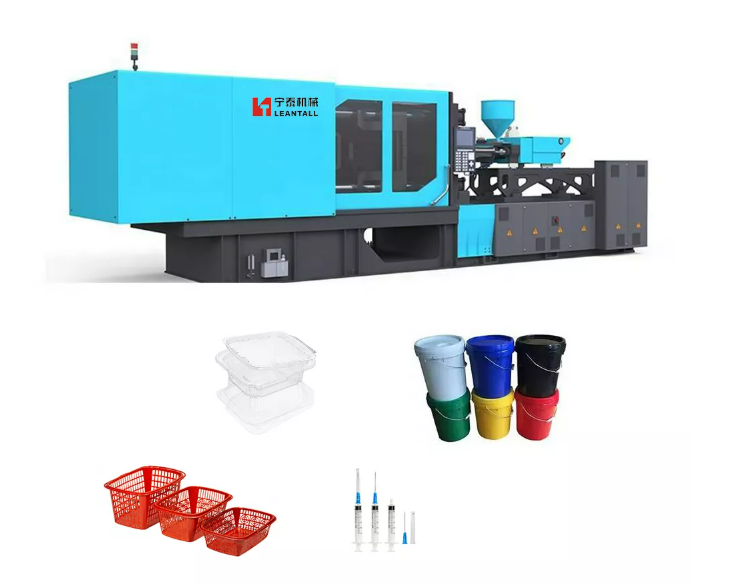
Automatic manipulators play a vital role across many industries. Their ability to perform precise, repetitive, and sometimes hazardous tasks efficiently makes them invaluable. Let’s explore how different sectors benefit from these versatile machines.
In manufacturing, automatic manipulators streamline production lines by handling tasks such as material handling, welding, and assembly. They reduce human error and fatigue, leading to higher quality and consistency. For example, in electronics assembly, manipulators place tiny components on circuit boards with exact precision. They also speed up packaging and palletizing, increasing throughput while reducing labor costs.
The medical field uses manipulators for delicate procedures requiring extreme accuracy. Surgical robots assist doctors in minimally invasive operations, improving patient outcomes and reducing recovery times. In pharmaceutical manufacturing, manipulators handle sterile vials and pills, ensuring contamination-free packaging. Their precision helps maintain strict quality control standards in drug production.
Automatic manipulators are essential in automotive production lines. They perform tasks like welding car bodies, painting, and installing parts. These robots work tirelessly, maintaining consistent quality while improving safety by taking on dangerous jobs. Companies like Tesla and Volvo use manipulators extensively to boost productivity and reduce production time.
In agriculture, manipulators automate harvesting, sorting, and packing. For instance, robotic arms equipped with sensors can pick fruits gently, minimizing damage. Food processing plants use manipulators for tasks such as cutting, packaging, and palletizing. This automation enhances food safety by reducing human contact and increasing hygiene standards.
Implementing automatic manipulators brings many benefits, but it also involves challenges that businesses must carefully consider. Addressing these issues early ensures smooth integration and maximizes the value gained from these advanced systems.
Automatic manipulators often require a significant upfront investment. Costs include purchasing the robot, custom end effectors, installation, programming, and maintenance. High-precision models or those with advanced sensors and AI capabilities tend to be more expensive. Businesses should weigh these costs against expected productivity gains and long-term savings from reduced labor and error rates.
Additionally, some manipulator systems may require facility modifications or additional safety equipment, increasing initial expenses. However, as technology advances, prices are gradually decreasing, making manipulators more accessible to small and medium-sized enterprises.
Integrating manipulators into current production lines can be complex. Compatibility issues may arise with legacy machinery, software, or communication protocols. Ensuring seamless data exchange between the manipulator’s controller and existing systems is crucial for coordinated operation.
Custom programming and interface development may be necessary to adapt the manipulator to specific workflows. This process requires thorough planning and testing to avoid disruptions. Moreover, physical space constraints or layout changes might be needed to accommodate the new equipment.
Operating and maintaining automatic manipulators demand specialized skills. Staff need training on programming, troubleshooting, and safety procedures. Without proper knowledge, errors or accidents may occur, negating the benefits of automation.
Companies should invest in comprehensive training programs and possibly hire experts during initial deployment. Over time, as operators become proficient, the manipulator can be used more flexibly and effectively. Additionally, ongoing education is important to keep pace with software updates and technological improvements.
Automatic manipulators are becoming smarter thanks to rapid progress in artificial intelligence (AI) and machine learning (ML). These technologies enable manipulators to learn from experience, adapt to new tasks, and optimize their performance without constant human input. For example, AI algorithms can analyze sensor data to improve grip strength or adjust movement paths in real-time, reducing errors and increasing efficiency.
Machine learning also supports predictive maintenance. Manipulators can detect early signs of wear or malfunction and alert operators before breakdowns occur. This reduces downtime and maintenance costs. Furthermore, AI-powered vision systems enhance object recognition and environmental awareness, allowing manipulators to handle complex, unstructured tasks previously impossible for traditional robots.
While manufacturing and automotive industries have long used automatic manipulators, new sectors are embracing this technology. Healthcare is a prime example; surgical robots now perform delicate operations with precision beyond human capability. In agriculture, manipulators assist with harvesting, sorting, and packaging crops, improving yield and reducing labor needs.
Other emerging sectors include logistics, where manipulators automate sorting and palletizing in warehouses, and construction, where they aid in building and material handling in hazardous environments. The versatility and adaptability of modern manipulators make them valuable across diverse fields, driving wider adoption.
Future automatic manipulators will increasingly operate autonomously, requiring minimal human supervision. Advances in AI, sensor fusion, and control systems will allow manipulators to make decisions, respond to unexpected changes, and coordinate with other robots or humans seamlessly.
Autonomous manipulators could manage entire production processes, from raw material handling to final assembly, enhancing productivity and flexibility. They may also collaborate with mobile robots to transport items between workstations, creating fully automated workflows. This autonomy reduces the need for specialized programming and lowers operational costs.
Automatic manipulators revolutionize industries by enhancing safety, productivity, and precision. Key components include controllers, arms, end effectors, drives, and sensors. Various types, like articulated, SCARA, and gantry robots, cater to specific tasks. Industries such as manufacturing, medical, and automotive benefit greatly. Despite challenges like cost and integration, future trends in AI and autonomous operations promise further advancements. Companies like LEANTALL offer innovative solutions, ensuring businesses achieve optimal performance and value from these technologies.
A: An automatic manipulator is a robotic device designed to mimic human arm functions, using components like controllers, sensors, and end effectors for tasks requiring precision and endurance.
A: Automatic manipulators work by the controller sending signals to drives, moving the arm segments through joints, while sensors provide feedback for precise object handling.
A: Automatic manipulators improve safety, enhance productivity, offer better precision, and provide operational flexibility in various industries.


