


Views: 0 Author: Site Editor Publish Time: 2025-10-10 Origin: Site


Imagine machines that mimic human arms, performing tasks with precision and speed. These are robot manipulators. But what exactly is a robot manipulator, and why are they crucial in automation? In this post, you'll learn about the role of single arm manipulator in enhancing productivity and efficiency across various industries.
Robot manipulators come in several types, each designed for specific tasks and work environments. Understanding these types helps you pick the right one for your needs. Here are the main types:
Also called gantry robots, Cartesian manipulators move in straight lines along three axes: X, Y, and Z. Their simple, box-shaped workspace makes them ideal for tasks requiring accuracy and repeatability. You’ll find them in 3D printing, milling, and laser cutting.
● Pros: Easy to program and maintain, high precision, strong load capacity.
● Cons: Limited to linear movements, large footprint.
These have a rotary joint at the base, plus a vertical and radial linear joint. Their workspace is cylindrical. They’re good for material handling and simple pick-and-place jobs.
● Pros: Compact footprint, straightforward programming.
● Cons: Limited reach within a cylinder, not fast for complex tasks.
Spherical manipulators move inside a spherical workspace, combining rotary and linear joints. They offer more flexibility than cylindrical types and are used in welding, painting, and assembly.
● Pros: Broad movement range, compact footprint.
● Cons: Less precise than Cartesian, programming is more complex.
SCARA stands for Selective Compliance Assembly Robot Arm. These manipulators have two parallel rotary joints for horizontal movement and a vertical linear joint. They excel in fast, precise assembly tasks.
● Pros: High speed, accuracy in horizontal plane, easy maintenance.
● Cons: Limited vertical movement, restricted to planar tasks.
Articulated manipulators resemble a human arm, with multiple rotary joints allowing movement in many directions. They provide great flexibility and dexterity for complex tasks like automotive assembly or robotic surgery.
● Pros: Highly versatile, can fold into compact spaces, handle heavy loads.
● Cons: Complex programming, higher cost and maintenance.
Also known as hexapods, these use multiple arms working together to move the end-effector. They offer great precision and stiffness, ideal for flight simulators, surgery, and precision assembly.
● Pros: High accuracy, rigid structure, fast response.
● Cons: Smaller workspace, complex control.
Robot manipulators consist of several key parts, each playing a vital role in their operation and effectiveness. Understanding these components helps us see how manipulators perform complex tasks with precision and flexibility.
The base acts as the foundation. It supports the entire manipulator and keeps it steady during operation. For fixed robots, the base is usually bolted to the floor or a stable platform to prevent tipping or vibration. Mobile robots may have bases on wheels or tracks for movement. The base must be strong enough to handle the robot’s weight and the forces generated during movement, especially when lifting heavy loads.
Links are the solid sections connecting joints. Think of them as the robot’s “bones.” They provide structure and determine how far the manipulator can reach. Longer links increase reach but might reduce precision due to flexibility. Shorter links offer better control but limit workspace. Materials matter too—lightweight metals like aluminum speed up movement, while steel adds strength for heavy-duty tasks.
Joints connect links and allow movement. They define how the manipulator bends, twists, or extends. There are three main joint types:
● Revolute Joints: Rotate around one axis, like a human elbow. Common in articulated arms.
● Prismatic Joints: Slide linearly along an axis, similar to a drawer opening.
● Ball-and-Socket Joints: Rotate in multiple directions, like a shoulder. Less common but offer high dexterity.
The number and type of joints determine the robot’s degrees of freedom (DoF). More DoF means more movement flexibility. For example, a 6-DoF robot arm can mimic human arm motions closely.
Actuators are the “muscles” that move joints. They convert energy into motion. Common types include:
● Electric Actuators: Precise and clean, ideal for delicate tasks.
● Hydraulic Actuators: Powerful, good for heavy lifting.
● Pneumatic Actuators: Fast and lightweight, suited for simple repetitive work.
Most modern robots use electric servo motors paired with gearboxes for controlled, smooth movement. Encoders or sensors provide feedback on joint positions for accuracy.
The end-effector is the tool at the manipulator’s tip. It interacts directly with objects or the environment. Different tasks require different end-effectors, such as:
● Grippers: For holding and moving objects.
● Suction Cups: For lifting smooth, flat items.
● Welding Torches: For joining materials.
The end-effector must match the task’s needs for shape, strength, and precision.
Robot manipulators rely on control systems to execute precise and reliable movements. These systems direct the actuators and joints, ensuring the manipulator performs tasks accurately and efficiently.
Open-loop control systems work without feedback. They send commands to the robot’s actuators based on preset instructions, but they don’t check if the movements were successful or accurate. This simplicity makes open-loop systems easy to design and cost-effective.
● Advantages: Low cost, simple design, fast response.
● Disadvantages: No error correction, less accurate, cannot adapt to disturbances.
Open-loop control suits applications where high precision isn’t critical, such as basic pick-and-place tasks or repetitive movements in controlled environments.
Closed-loop control systems include feedback mechanisms. Sensors constantly monitor the robot’s position, speed, and force, sending data back to the controller. The controller compares this feedback to the desired state and adjusts commands in real time.
● Advantages: High accuracy, error correction, adaptability to changes.
● Disadvantages: More complex, higher cost, requires sensors and processing.
These systems are essential for tasks demanding precision, such as assembly, welding, or surgical operations.
Several control techniques improve manipulator performance:
● PID Control (Proportional-Integral-Derivative):This method adjusts the robot’s movements by calculating the error between desired and actual positions. Proportional corrects present errors.
○ Integral eliminates accumulated past errors.
○ Derivative predicts future errors to smooth motion.PID control reduces overshoot and stabilizes the manipulator.
● Trajectory Planning:Instead of moving in straight lines, this technique calculates smooth paths between points. It prevents sudden speed changes or jerky motions, protecting delicate parts and improving efficiency.
● Impedance Control:Used when the manipulator interacts physically with objects. It adjusts force and stiffness dynamically, adapting to unexpected resistance or compliance.
● Adaptive Control:This system changes control parameters based on varying conditions, such as changes in payload weight, ensuring consistent performance.
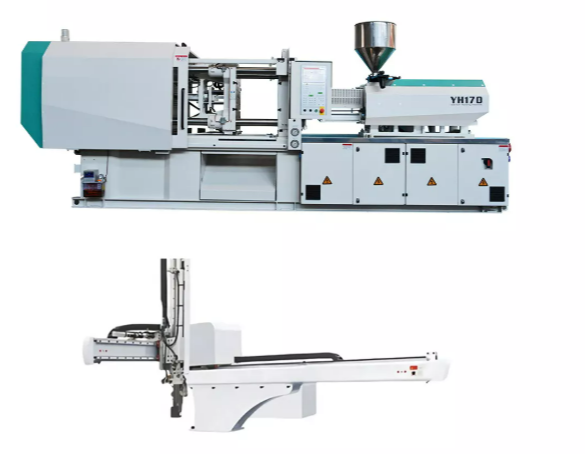
Robot manipulators are essential tools across many industries. They boost productivity, improve precision, and enhance safety. Let’s explore where these robotic arms shine most.
In manufacturing, robot manipulators handle repetitive, precise tasks. They speed up production and reduce human error. For example, in electronics, manipulators place tiny components on circuit boards accurately and quickly. In automotive plants, they weld, paint, and assemble parts consistently. These tasks demand precision and repeatability, which manipulators deliver without fatigue.
Robotic arms also improve workplace safety by taking on hazardous jobs like welding or working with heavy machinery. This reduces injury risks for human workers.
Assembly lines benefit greatly from robot manipulators. They pick, place, fasten, and glue parts with high speed and accuracy. Manipulators ensure each component fits perfectly, reducing defects. In packaging, they load products into boxes, seal packages, or apply labels efficiently.
For instance, in the food industry, robots package bottles or boxes quickly, maintaining hygiene and consistency. This automation lowers labor costs and speeds up throughput.
Material handling tasks involve moving, sorting, or loading items. Robot manipulators excel here by handling heavy or hazardous materials safely and swiftly. Warehouses use them to pick items off shelves, sort packages, or load trucks. In factories, manipulators transfer raw materials or finished goods between stations.
They work well in tough environments, such as high temperatures or confined spaces, where humans might struggle. This flexibility keeps production flowing smoothly.
Robot manipulators in healthcare perform delicate, precise tasks impossible for steady human hands. They assist in surgeries, delivering exact movements that reduce risks and improve outcomes. Manipulators also aid rehabilitation, guiding patients through controlled exercises.
In pharmaceutical labs, robots handle samples or prepare medications, minimizing contamination risks. Telemedicine benefits too, with robotic arms enabling remote surgeries by replicating surgeons’ movements.
Robot manipulators bring many benefits to automation, but they also have some challenges. Understanding both helps in choosing the right manipulator for your needs.
Manipulators can perform a wide range of tasks thanks to their flexible joints and multiple degrees of freedom. For example, articulated manipulators mimic human arm movements, allowing complex actions like welding or surgery. This dexterity makes them ideal for intricate assembly or delicate handling.
● Advantage: They adapt to different tasks and environments easily.
● Example: A robotic arm assembling tiny electronic parts can adjust grip and movement precisely.
However, this flexibility can increase the complexity of programming and control. More joints mean more calculations to coordinate movements smoothly.
Robot manipulators excel in tasks needing high precision. Cartesian manipulators, for instance, move in straight lines and are very accurate, perfect for 3D printing or circuit board assembly. Closed-loop control systems with sensors improve accuracy by constantly correcting errors.
● Advantage: They deliver consistent, repeatable results without fatigue.
● Example: In automotive welding, robots ensure each weld is uniform, enhancing quality.
On the downside, precision depends on factors like mechanical design, control algorithms, and sensor quality. Complex manipulators may suffer from cumulative errors across joints, reducing accuracy if not properly calibrated.
Advanced manipulators, especially those with many degrees of freedom, involve complex mechanical structures and sophisticated control systems. This complexity leads to:
● Higher initial costs for purchase and installation.
● Increased maintenance needs due to more moving parts.
● Greater programming effort requiring skilled engineers.
For example, an articulated robot arm used in aerospace manufacturing may cost significantly more than a simple Cartesian manipulator used for packaging.
Sometimes, the investment is justified by improved productivity and quality. But for simple tasks, a less complex and cheaper manipulator may suffice.
Robot manipulators continue evolving rapidly, driven by advances in technology and increasing industry demands. Three key trends are shaping the future of these robotic arms: advanced control systems, integration of AI and machine learning, and the use of new materials and designs.
Control systems are the brain of robot manipulators, guiding their precise movements. The future will see smarter, more adaptive systems that improve performance and flexibility.
● Real-Time Adaptive Control: Future controllers will adjust in real time to changes in payload, environment, or task conditions. This means manipulators can maintain accuracy even when unexpected forces or variations occur.
● Enhanced Sensor Fusion: Combining data from multiple sensors—vision, force, proximity—will allow manipulators to better understand their surroundings and make smarter decisions.
● Improved Trajectory Planning: Advanced algorithms will generate smoother, more efficient paths, reducing wear and tear while increasing speed and precision.
These innovations will make manipulators more reliable and capable of handling complex tasks in dynamic environments.
Artificial intelligence (AI) and machine learning (ML) are game-changers for robotics. They enable manipulators to learn from experience and optimize their performance.
● Predictive Maintenance: AI can analyze sensor data to predict when parts need servicing, minimizing downtime and repair costs.
● Autonomous Decision-Making: Machine learning models will allow manipulators to choose optimal actions without human input, adapting to new tasks or environments.
● Improved Vision and Recognition: AI-powered vision systems will enhance object detection, classification, and tracking, enabling more precise and flexible manipulation.
● Collaborative Robots (Cobots): AI will help manipulators safely work alongside humans by recognizing human actions and intentions, adjusting behavior accordingly.
By integrating AI, manipulators will become more intelligent, efficient, and easier to deploy across industries.
Materials science and innovative designs will boost manipulator performance, durability, and versatility.
● Lightweight Composites: Using carbon fiber and other composites reduces arm weight while maintaining strength, improving speed and energy efficiency.
● Flexible and Soft Robotics: Incorporating soft materials enables manipulators to handle delicate objects safely and navigate tight spaces.
● Modular Designs: Future manipulators may feature interchangeable modules for joints, actuators, or end-effectors, allowing rapid customization for different tasks.
● Energy-Efficient Actuators: Advances in actuator technology promise quieter, more efficient motors that extend robot operating time.
These developments will expand the range of applications and make robots more sustainable.
Robot manipulators, essential in various industries, offer flexibility, precision, and efficiency. They come in types like Cartesian and articulated, each serving specific tasks. Future trends include advanced control systems and AI integration, enhancing their capabilities. LEANTALL offers cutting-edge manipulators, ensuring businesses stay ahead in automation. Their products provide unmatched precision and adaptability, meeting diverse industrial needs efficiently.
A: An automatic manipulator is a robotic arm component that performs tasks autonomously, using programmed instructions to move and interact with objects.
A: An automatic manipulator uses actuators and control systems to move joints and links, executing tasks like assembly or material handling with precision.
A: Automatic manipulators boost efficiency and consistency in manufacturing by performing repetitive tasks quickly and accurately, reducing human error.
A: Automatic manipulators offer high precision, flexibility, and safety, enhancing productivity in industries like healthcare, manufacturing, and packaging.
A: Cartesian manipulators move linearly with high precision, while articulated manipulators offer greater flexibility and dexterity for complex tasks.


