


Views: 0 Author: Site Editor Publish Time: 2026-09-07 Origin: Site


The packaging industry demands extreme material reduction. Lightweighting pushes part geometries to their absolute physical limits. You need specialized manufacturing approaches. These methods balance extreme thinness against structural durability. Producing high-volume, thin-walled packaging on conventional equipment causes major issues. You frequently encounter short shots and excessive scrap. Premature mold wear becomes a daily reality on the shop floor. Cycle times remain entirely uncompetitive. Standard equipment simply lacks the mechanical force required for these applications. You must evaluate the mechanical and economic divide. Compare a purpose-built Thin Wall Packaging Molding Machine against standard equipment. This evaluation protects your margins. It ensures consistent part quality across millions of cycles. It also determines long-term capital expenditure viability. We will explore the exact technical thresholds separating these two machine categories.
Geometrical Thresholds: The transition from standard to thin-wall molding is technically defined by a Flow Length to Thickness (L/T) ratio exceeding 200:1 or wall thicknesses below 1mm.
Injection Dynamics: A dedicated thin wall injection molding machine utilizes specialized accumulators to achieve injection speeds and pressures (often exceeding 30,000 psi) that standard machines cannot sustain.
Structural Integrity: Thin-wall applications require heavily reinforced platens and robust clamping mechanisms to prevent deflection and flash under extreme injection pressures.
Design Flexibility: Advanced thin-wall systems enable complex component designs, such as continuous features and living hinges, which are impossible to fill on standard equipment.
Operational Economics: While the initial CapEx for high speed injection molding equipment is higher, the ROI is justified through reduced resin usage, sub-3-second cycle times, and lower per-part energy costs.
The Flow Length to Wall Thickness ratio dictates your equipment needs. It establishes the mathematical baseline for machine selection. Standard equipment generally fails when the L/T ratio exceeds 200:1. The melt must travel a long distance through a very narrow cavity. This creates immense flow resistance. Standard hydraulics cannot overcome this resistance fast enough. You end up freezing the material before the cavity fills completely. Consider a standard 500ml deli container. The gate sits at the bottom center. The plastic must flow outward, up the sidewalls, and into the rim. If the wall is 0.4mm thick and the flow path is 120mm, your L/T ratio is 300:1. Standard presses will stall out trying to push material through that gap.
Polymer melt viscosity changes dramatically during rapid injection. High shear rates temporarily thin the material. This shear-thinning effect is mandatory for filling ultra-thin cavities. You must inject the plastic violently and quickly. Slow injection allows the material to cool against the mold walls. This leads to premature gate freeze-off. Once the gate freezes, you cannot pack out the part. Dedicated machines maintain the necessary shear rates to keep the melt flowing. Polypropylene (PP) and Polyethylene (PE) behave differently under these extreme conditions. You need equipment that can manipulate this non-Newtonian fluid behavior to your advantage.
High-volume packaging products have unique requirements. Items like one-liter pails, food containers, and lids demand specific engineering. You cannot rely on wall thickness for structural strength. Strength must be achieved through strategic ribbing and geometric design. These micro-features require immense pressure to fill properly. A standard machine will leave these ribs short. You need specialized equipment to replicate these intricate details consistently across millions of cycles. A dairy tub lid, for example, requires a perfectly formed undercut for snap-fit retention. Missing that detail by a fraction of a millimeter results in leaking product and rejected shipments.
Fractional seconds dictate overall profitability in the packaging sector. You are producing high volumes where every tenth of a second matters. A standard machine might run a container in eight seconds. A specialized machine can run the same container in three seconds. This massive difference in output defines your market competitiveness. Slow recovery rates and sluggish movements destroy your profit margins. You must prioritize equipment designed for absolute speed. Over a 6,000-hour production year, a five-second cycle time reduction yields millions of additional parts from a single mold.
A standard injection molding machine operates within conventional parameters. Injection speeds typically max out around 150 to 200 millimeters per second. Injection pressures rarely exceed 20,000 psi. The clamp design focuses on general-purpose stability rather than extreme rigidity. The hydraulic systems prioritize consistent, moderate-speed movements. These machines use standard proportional valves. They lack the instantaneous response times required for ultra-fast molding. The pump capacity is sized for general applications, meaning it cannot deliver the sudden surge of hydraulic fluid needed to pack out a thin-wall mold.
Standard machines remain the optimal choice for many applications. They excel where thicker walls rely on mass for durability. Automotive parts, heavy consumer goods, and industrial components fit this profile. These products have L/T ratios well below 150:1. They do not require split-second cavity filling. Lower production volumes also justify standard equipment. If cycle time is not the primary cost driver, standard machines provide excellent value. A heavy-duty storage tote or a thick-walled pipe fitting runs perfectly on conventional equipment.
Using standard machines for thin-wall packaging introduces severe failure points. You will face constant production headaches on the shop floor. Operators will constantly tweak hold pressures trying to force material into the mold, which only causes flash on the parting line.
Inability to achieve required fill speeds causes immediate short shots.
Structural weaknesses occur because the material cools unevenly during slow injection.
Failed continuous features and missing living hinges become common defects.
Platen deflection under high cavity pressure results in severe flash.
Accelerated tooling wear happens because the clamp cannot hold the mold perfectly parallel.
Inadequate recovery rates extend cycle times far beyond competitive packaging standards.
Inconsistent shot weights lead to dimensional variations and warped containers.
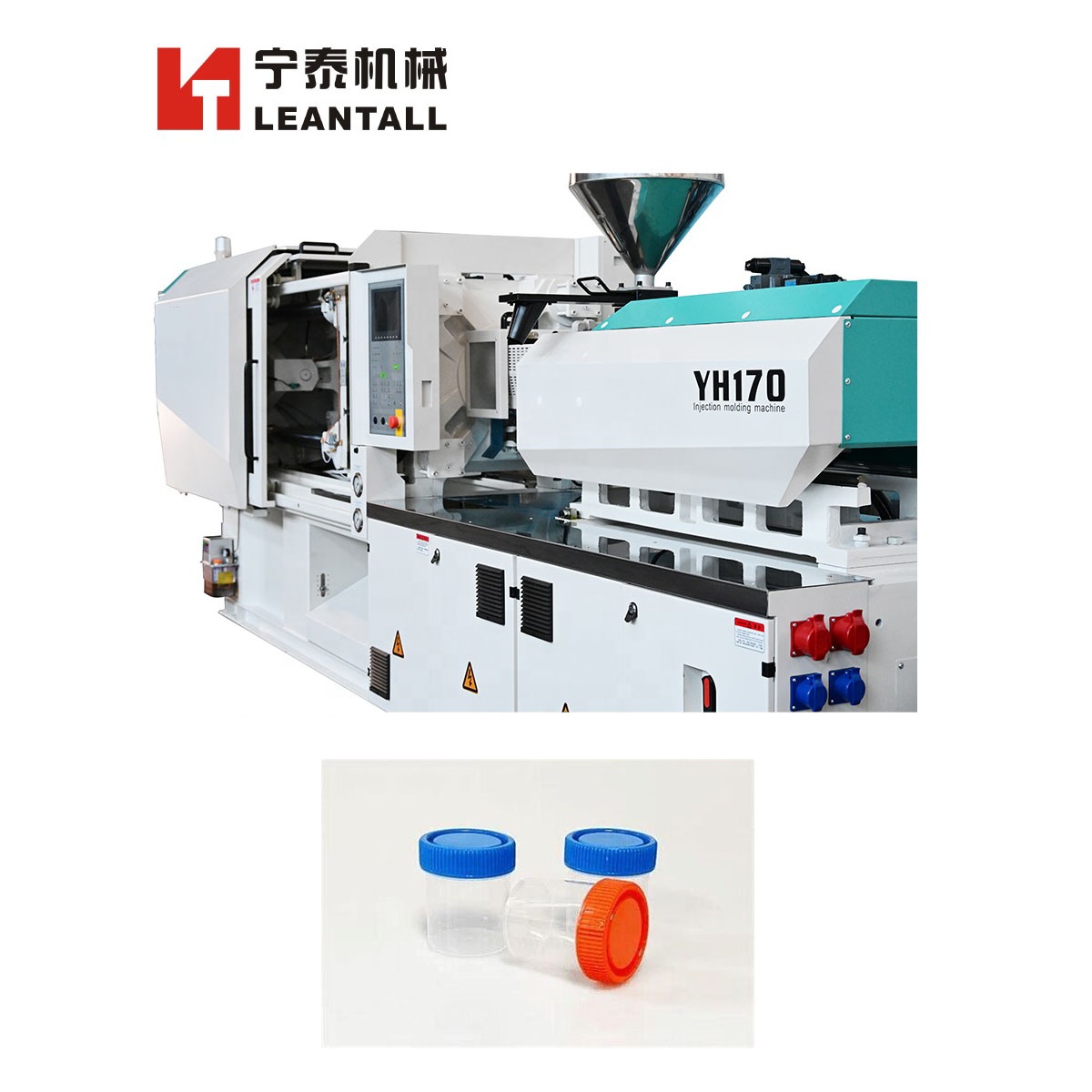
Standard hydraulics cannot deliver fluid fast enough for thin-wall applications. You need nitrogen-charged hydraulic accumulators. These devices store hydraulic energy under high pressure. They release this energy instantly during the injection phase. This provides the instantaneous burst of power required to fill cavities before the material freezes. Accumulators decouple the injection speed from the primary pump capacity. They act like a massive battery for hydraulic fluid. When the injection valve opens, the nitrogen expands, driving the fluid into the injection cylinder at rates impossible for a standard pump to match.
The velocity differences are staggering. Thin-wall machines often achieve injection speeds between 800 and 1200 millimeters per second. Standard machines struggle to hit 200 millimeters per second. Extreme pressures accompany these high speeds. Injection pressures frequently exceed 30,000 psi, sometimes pushing 40,000 psi for extreme L/T ratios. You need this immense force to push viscous polymer through sub-millimeter gaps. The machine must reach maximum velocity in milliseconds. This rapid acceleration defines successful thin-wall production. The screw must act like a bullet, ramming the plastic home before the cooling channels can freeze the flow front.
Rapid injection facilitates greater component design flexibility. You can successfully mold intricate details in a single rapid cycle. Living hinges require the plastic to flow through a microscopic restriction. Slow injection cools the material, snapping the hinge during first use. High-speed injection keeps the melt hot and pliable through the restriction. This aligns the polymer molecules perfectly. You get a durable, flexible hinge straight out of the mold. Tamper-evident tear bands on food containers also rely on this high-speed molecular alignment to function correctly without breaking prematurely.
Extreme injection pressures try to blow the mold open. The machine platens must resist this explosive force. Thin-wall machines feature heavily reinforced, high-rigidity platens. These cast structures maintain absolute parallelism under extreme stress. Standard platens will bow slightly in the center. This bowing allows plastic to escape the cavity, creating flash. Rigid platens keep the parting line perfectly sealed. This protects your mold and eliminates secondary trimming operations. We measure platen deflection in thousandths of an inch; in thin-wall molding, even a few thousandths of deflection will destroy a high-cavitation mold over time.
Multi-cavity molds require uniform force distribution. Think of a dual-cavity pail mold or a 16-cavity yogurt cup mold. If the clamping force is uneven, one cavity flashes while the other short-shots. Specialized clamping units prevent tie-bar stretching. They distribute tonnage evenly across the entire platen surface. This uniform pressure protects delicate core pins. It ensures identical part weights across all cavities. It prevents catastrophic mold damage during high-speed operation. Advanced toggle designs lock up with immense force, transferring the load directly through the center of the platen.
Rapid cycling demands intense power. Traditional hydraulic pumps waste massive amounts of energy idling between cycles. A modern servo injection molding machine solves this problem. Servo-driven hydraulics only consume power when moving. They manage the intense power requirements of rapid cycling without excessive energy waste. All-electric drives offer even greater efficiency for specific movements like plasticizing and ejection. This technology drastically reduces your per-part energy consumption. It keeps your operational costs competitive while delivering the raw power needed for accumulator charging.
Ultra-thin parts leave zero margin for error. A fraction of a gram variation causes major defects. Servo motors provide exact shot weight control. They stop the screw instantly at the precise position. This minimizes dimensional variations across millions of cycles. You achieve perfect repeatability. Servo valves react in milliseconds, transferring pressure profiles flawlessly. This precision is mandatory for high-quality packaging production. When you are molding a container with a 0.35mm wall, a slight over-pack will blow the bottom out of the part, while a slight under-pack leaves a jagged, unfilled rim.
Mechanical speed limits define your maximum theoretical output. Standard machines have dry cycle times around two to three seconds. Thin-wall machines cut this time in half. They feature optimized toggle kinematics for lightning-fast lockup. Every moving mass is minimized for rapid acceleration. These fractional second savings compound over millions of parts. They directly increase your annual production capacity per square foot of factory floor. The platen moves so fast it becomes a blur, requiring advanced braking valves to stop the mass without slamming the mold halves together.
Getting the plastic into the mold is only half the battle. You must remove the heat instantly. Machine design integrates directly with high-performance cooling systems. You need massive water flow through the platens. Rapid ejection mechanisms punch the parts out violently. Standard ejectors are too slow. Thin-wall machines use specialized hydraulic or servo ejectors. They clear the mold in milliseconds, allowing the clamp to close immediately. Air blast ejection is often synchronized with mechanical pins to strip the parts off the cores before the mold is even fully open.
Decorated food containers require In-Mold Labeling. This process demands seamless synchronization between the molding machine and high-speed robotics. The robot must enter the open mold, place the label, remove the finished part, and exit in under one second. The machine must communicate flawlessly with the automation. Standard machines lack the processing speed for this tight integration. Dedicated machines feature specialized software interfaces for IML robotics. The Euromap 67 or 73 interfaces must trigger with zero latency, ensuring the robot end-of-arm tooling does not crash into the closing platens.
High-cavitation thin-wall molds are incredibly expensive investments. Machine structural rigidity directly correlates to tooling lifespan. If platens deflect, the mold halves shift slightly. This causes core wear and damages shut-off surfaces. Rigid machines keep the mold perfectly aligned. This prevents premature wear. It extends the life of your tooling significantly. You avoid costly mold rebuilds and extended production downtime. A well-supported mold can run ten million cycles without major refurbishment; a poorly supported mold on a standard machine will gall and seize before hitting one million.
You must stop injection instantly when the cavity fills. Over-packing a thin-wall mold causes severe damage. Ultra-fast proportional valves are an absolute necessity. They react in milliseconds to pressure spikes. Standard valves coast to a stop, packing extra material into the cavity. High-response valves cut the pressure immediately. They protect delicate mold components from catastrophic failure.
Technical Parameter | Standard Injection Molding Machine | Thin Wall Packaging Molding Machine |
|---|---|---|
Injection Speed | 100 - 200 mm/s | 800 - 1200+ mm/s |
Injection Pressure | Up to 20,000 psi | 30,000 - 40,000+ psi |
L/T Ratio Capability | Below 150:1 | Exceeding 200:1 (up to 350:1) |
Hydraulic System | Standard Pump / Proportional Valves | Nitrogen Accumulators / High-Response Servo Valves |
Platen Design | Standard Cast Iron | Heavily Reinforced, High-Rigidity Castings |
Typical Cycle Time | 8 - 15 seconds | 2 - 5 seconds |
Ejection Speed | Moderate, single stroke | Ultra-fast, multi-stroke servo/hydraulic |
High-speed injection molding generates massive amounts of heat. You are melting and freezing plastic every three seconds. This requires serious heat removal capabilities. Standard plant cooling systems will fail under this load. You must audit your chilled water infrastructure. Ensure your chillers can handle the increased BTU extraction. Upgrade your pipe diameters to maximize turbulent flow through the mold. Inadequate cooling will throttle your cycle times immediately. You need high Reynolds numbers in your cooling channels to strip the heat away from the tool steel.
Accumulator charging and servo drives pull massive electrical currents. The instantaneous power draw during injection is severe. Evaluate your electrical infrastructure before installing these machines. You may need dedicated transformers. Check your breaker capacities and wire gauges. Voltage drops during the injection phase will cause inconsistent part quality. Proper electrical planning prevents costly installation delays and operational instability. A machine pulling 400 amps during a two-second charge phase will trip standard breakers designed for steady-state loads.
Acknowledge the accelerated wear inherent in thin-wall applications. You are running equipment at its absolute physical limits. Screws and barrels experience extreme shear forces. Hydraulic components face constant high-pressure spikes. Toggle pins and bushings endure violent acceleration and deceleration. This high-stress environment degrades components faster than standard molding. You must plan for more frequent replacement of wear items. Bimetallic barrels and armored screws are mandatory to survive the abrasive nature of high-speed plasticizing.
You cannot run these machines to failure. Unplanned downtime destroys packaging profitability. Establish rigorous, non-negotiable maintenance schedules. Monitor hydraulic oil cleanliness obsessively. Dirty oil destroys high-response servo valves instantly. Grease toggle mechanisms automatically and frequently. Inspect tie-bar stretch and platen parallelism quarterly. Strict preventative maintenance mitigates catastrophic failures and ensures consistent high-speed production. Implement oil filtration systems capable of maintaining ISO 14/12/9 cleanliness levels.
Thin-wall molding requires high-MFI resins. These materials flow easily under pressure. However, high shear rates risk material degradation. You must balance the MFI against the mechanical properties of the final part. If the MFI is too high, the container becomes brittle. If it is too low, you cannot fill the cavity. Work closely with resin suppliers to select specialized thin-wall grades. A 50 to 100 melt flow Polypropylene is common, but it requires precise temperature control to prevent burning in the barrel.
Designing parts for thin-wall molding is a severe engineering challenge. You must utilize minimal resin to save costs. Yet, the part must maintain structural integrity for stacking and transport. A pallet of filled food containers exerts immense downward pressure. You must design strategic ribs and gussets. These features provide vertical crush resistance without adding overall wall thickness. Proper part design is critical for functional success. Draft angles must be optimized to allow for violent ejection without scuffing the part surface.
A dedicated thin-wall machine requires a higher initial capital expenditure than standard equipment. You must balance this upfront cost against long-term operational savings. Standard machines look cheaper on day one. However, their slow cycle times and high scrap rates bleed money daily. The specialized machine pays for its premium through sheer output volume. You produce twice as many parts per shift, drastically lowering your overhead cost per unit. The math heavily favors the high-speed equipment when running 24/7 packaging operations.
Material costs dominate packaging economics. Reducing wall thickness by just 0.1mm saves massive amounts of resin. Across millions of parts, this fractional reduction equals thousands of pounds of saved polymer annually. Standard machines cannot mold that 0.1mm thinner wall. The specialized machine enables this material reduction. The resin savings alone often justify the equipment upgrade within the first eighteen months of operation. You are shipping less plastic and more product.
Precision control directly improves your bottom line. Standard machines struggle with consistency at high speeds. They produce short shots and flashed parts. This scrap requires regrinding or disposal, wasting energy and labor. Thin-wall machines maintain exact parameters shot after shot. Servo precision minimizes defect rates. You convert more raw material into sellable product. Lower scrap rates improve overall equipment effectiveness and boost your profit margins.
Conduct a comprehensive mold flow analysis on your current part designs to determine exact L/T ratios and identify potential fill issues.
Schedule physical machine trials using your specific high-MFI resins to verify injection speed requirements and validate cycle time projections.
Audit your plant's chilled water infrastructure to ensure it can handle the massive BTU extraction required for sub-5-second cooling loads.
Evaluate your electrical grid capacity with a certified technician to support the severe amperage spikes generated by accumulator charging.
Inspect your existing tooling for adequate venting and core support before attempting to run it on high-speed accumulator-driven equipment.
A: Retrofitting is generally ineffective. You can add hydraulic accumulators to boost injection speed. However, you cannot easily upgrade the platen rigidity or tie-bar strength. The standard clamp will deflect under the new high-pressure injection, causing severe flash. Furthermore, standard controllers lack the processing speed for ultra-fast proportional valves. A full machine replacement is usually necessary for reliable production.
A: The baseline speed typically exceeds 500 mm/s. For extreme thin-wall applications, speeds between 800 mm/s and 1200 mm/s are standard. The exact requirement depends on your part geometry, L/T ratio, and the presence of continuous features like living hinges. Slower speeds result in premature gate freeze-off and short shots.
A: It provides a critical balance of power and efficiency. The accumulators deliver the raw, high-speed power needed for injection. The servo drives provide extreme energy efficiency during the rest of the cycle by only consuming power when moving. Servo motors also offer superior precision for screw positioning, ensuring exact shot weights and preventing dimensional variations.
A: The difference is substantial. A standard machine might run a specific packaging container in 8 to 10 seconds. A dedicated high-speed machine can reduce that cycle to 2 to 4 seconds. This massive reduction is achieved through faster injection, rapid cooling, and lightning-fast mechanical lockup.
A: Thin-wall molding drastically increases stress on the tooling. The extreme injection pressures and rapid cycling accelerate wear. You must use high-grade tool steels and ensure the machine has highly rigid platens. Without perfect platen parallelism, the mold halves will shift, causing premature failure, galled cores, and expensive rebuilds.
A: Standard hydraulic pumps cannot deliver oil fast enough to achieve required injection speeds. Accumulators store pressurized nitrogen gas and hydraulic fluid. During injection, they release this stored energy instantly. This physics allows the machine to fill the mold cavity before the thin polymer layer freezes against the cold steel walls.


