


Views: 0 Author: Site Editor Publish Time: 2026-07-08 Origin: Site


Producing high-volume medical consumables demands absolute precision. Needle hubs, Luer caps, and connectors require manufacturers to balance strict regulatory compliance against aggressive cost-per-part targets. The stakes are incredibly high in this industry. At scales reaching tens of millions of units, even minor inefficiencies cause massive problems. Poor cycle times, inadequate mold cooling, or slight cleanroom contamination lead to severe profitability drains. More importantly, these issues cause immediate compliance failures. We created this guide to break down the specific evaluation criteria for shortlisting a disposable medical product molding machine. You will learn how to assess machine architecture effectively. We will also explore essential tooling specifications and confront modern cleanroom automation realities. This ensures you make procurement decisions grounded in actual manufacturing data.
Drive Systems Matter: All-electric molding machines are the baseline for ISO Class 7/8 cleanrooms due to oil-free operation and micro-tolerance repeatability.
Tooling Lifespan Determines ROI: Medical-grade molds must utilize high-grade steels (e.g., S136) to sustain "Super Hard" lifespans exceeding 3 million shots without degradation.
Turnkey vs. Standalone: True scalability requires evaluating machines alongside automated material handling, closed-loop data tracking for FDA compliance, and integrated assembly.
Standard injection molding parameters often fall short in medical manufacturing. You face strict ISO 80369-7 Luer lock standards. You also deal with complex internal geometries inherent to needle hubs and IV components. Ordinary machine settings cannot guarantee the required dimensional stability. Luer slips and locks rely on precise tapers to prevent dangerous fluid leaks. Therefore, every single molded part must maintain exact micro-tolerances.
We must map mold cavitation to your expected production volume. Match your anticipated annual output directly to the correct mold design. A production target exceeding 100 million units typically requires a 32-cavity or 64-cavity setup. You face a distinct trade-off here. Higher cavitation demands exponentially higher clamping force precision. You also need perfectly balanced runner systems. This critical balance ensures molten plastic reaches every cavity at the exact same pressure. It prevents common defects like short shots and eliminates flash on the parting lines.
Material nuances matter immensely when setting baseline requirements. The machine’s screw design must accommodate medical-grade polypropylene (PP) for sturdy hubs. It must also handle polyethylene (PE) or polycarbonate (PC) effortlessly. These chosen plastics behave differently under heat and pressure. Furthermore, the molded components must withstand aggressive future sterilization processes. These include gamma irradiation and high-temperature autoclaving. Gamma rays can discolor certain polymers, while autoclaving demands high thermal stability. Your equipment must process these advanced materials without degrading their molecular structure.
Annual Volume Target | Recommended Cavitation | Cycle Time Goal | Primary Challenge |
|---|---|---|---|
10M - 30M Units | 16 to 32 Cavities | 10 - 12 Seconds | Balancing cooling rates. |
30M - 80M Units | 32 to 48 Cavities | 9 - 11 Seconds | Maintaining clamp force distribution. |
100M+ Units | 64+ Cavities | Under 9 Seconds | Melt flow uniformity across all runners. |
We need to compare drive systems objectively. We base this comparison on cleanroom constraints, particulate generation, and operational efficiency. Choosing the right architecture prevents contamination and accelerates output.
All-electric systems now dominate modern cleanroom manufacturing. They represent the gold standard for medical disposables. They use independent servo motors for injection, plasticizing, clamping, and ejection. You gain massive operational benefits. Electric drives completely eliminate hydraulic oil contamination risks. This keeps your ISO Class 7 or 8 controlled environments pristine. They also facilitate overlapping machine movements. You can eject parts while the screw is already plasticizing the next shot. This simultaneous action yields much faster cycle times. Sub-11 seconds is highly achievable for multi-cavity disposable components.
Hybrid systems still hold strategic value. We acknowledge them as a strong bridge solution. They suit facilities needing extremely high clamping force, sometimes reaching up to 2300kN. They require lower initial capital expenditure than fully electric models. A hybrid press uses hydraulics for heavy clamping but electric servos for precise injection. However, you must implement strict containment protocols. Any hydraulic system introduces slight airborne oil mist risks over time.
Mechanical innovations drive modern medical molding progress. Tie-bar-free (TBF) lock structures stand out as a crucial evaluation metric. TBF designs maximize your cleanroom floor space. They allow automation robots easier access to the mold area. Most importantly, they minimize particulate generation. Traditional tie-bars require lubrication, which eventually sheds microscopic particles. Removing the tie-bars eliminates this contamination source entirely.
Feature | All-Electric | Hybrid |
|---|---|---|
Contamination Risk | Zero (Oil-free) | Low to Medium |
Precision Level | Micro-tolerance | High tolerance |
Cycle Speed | Extremely Fast (Simultaneous motion) | Fast |
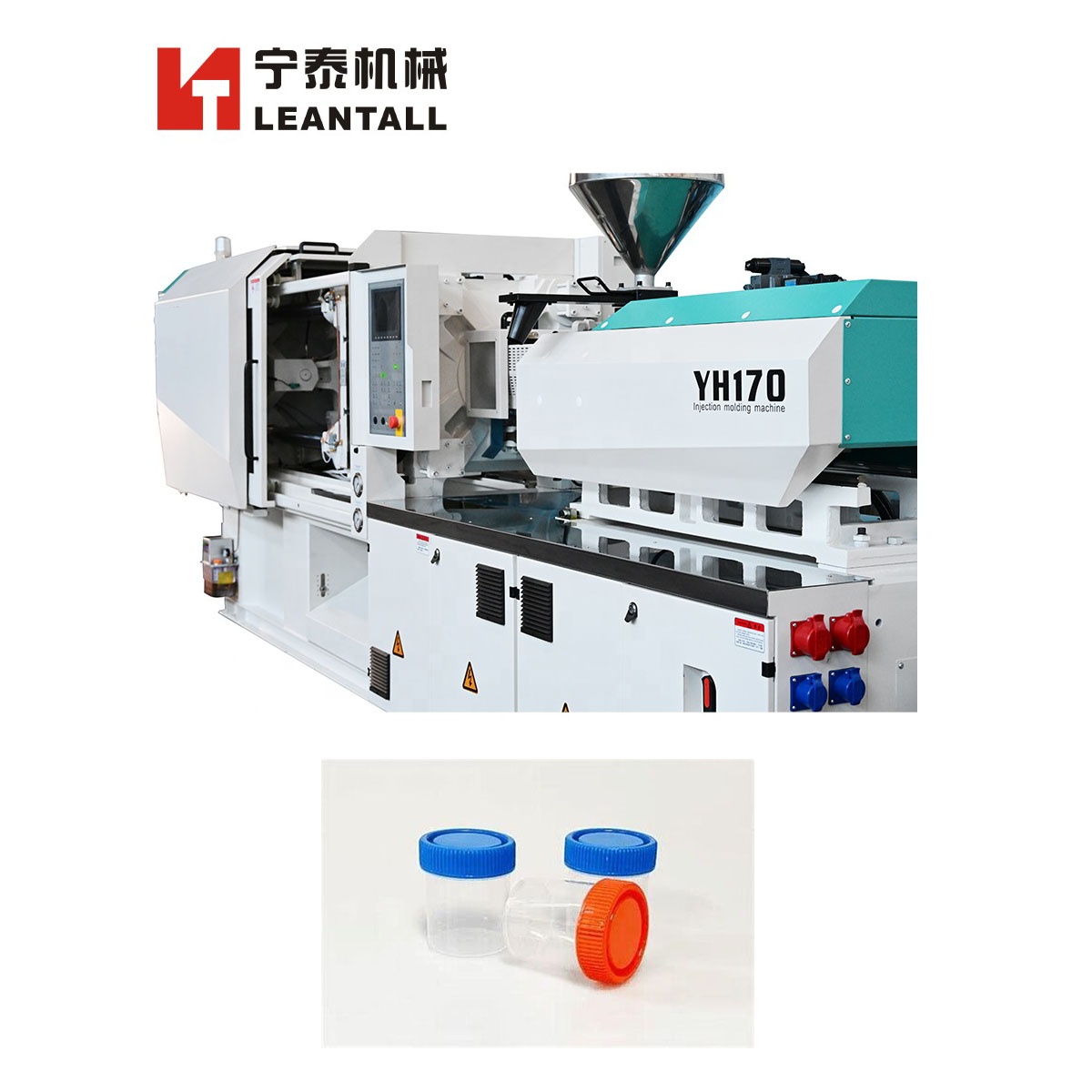
The injection machine is only as capable as its tooling. You must rigorously evaluate the medical injection mould proposed by your vendors. A poor mold design will throttle the performance of even the best all-electric press.
Steel selection and hardness dictate production longevity. We categorize molds by their expected lifespan. Soft molds typically yield roughly 500,000 shots. Hard molds reach 1,000,000 shots reliably. Super Hard molds push past the one-million mark to exceed 3,000,000 shots. You must require specific steel grades for high-volume consumables. Look for S136 or DC53 stainless steel for the core and cavity. S136 offers exceptional corrosion resistance against cooling water. It also takes a mirror polish beautifully. These grades maintain continuous high-volume production without dimensional drift or cavity wear.
Runner systems require special attention for complex tubing components. Let us examine cold versus semi-hot and hot runners. You must evaluate these systems carefully when selecting an IV set plastic parts injection mould. Hot runners significantly reduce material waste during high-volume runs. They keep the plastic molten right up to the cavity gate. However, they demand strict thermal management. Improper heat control causes resin degradation and weak part structure. Cold runners are simpler and cheaper to maintain but generate scrap plastic that you must recycle or discard.
Cooling and gate layouts define final part quality. Scientifically designed cooling lines are absolutely non-negotiable. They ensure consistent shrinkage rates across all 64 cavities. If one cavity cools slower than the others, that specific needle hub will warp. Proper conformal cooling layout eliminates warping and other common production defects. It also shaves vital seconds off your cycle time.
Common Mistake: Relying on standard straight-drilled cooling channels for complex Luer geometries. Always insist on conformal cooling designs that follow the part's exact contours.
Implementation realities often surprise procurement teams. A molding press does not operate in a vacuum. Integration is exactly where project timelines often stall. You must plan for the entire production cell.
Material handling requires absolute isolation in medical facilities. You need closed-loop, automated vacuum conveying systems. These systems move plastic resin directly from external dryers to the cleanroom press. They operate entirely without human intervention. This setup eliminates a primary source of cleanroom contamination: airborne dust from resin bags. The dryers sit outside the ISO 8 environment, piping perfectly dried material directly into the machine's hopper.
Industry 4.0 drives modern compliance standards. Vendors must offer advanced PLC (Programmable Logic Controller) systems. These controllers must handle real-time data logging seamlessly. We tie this data directly to FDA requirements and ISO 13485 Quality Management System standards. Medical manufacturers must prove lot traceability every single day. You need consistent parameter controls documented for every batch produced.
Consider these integration requirements for successful deployment:
Robotic Part Removal: Utilize high-speed side-entry robots to extract parts before they drop, preventing surface scratches.
Vision Inspection: Integrate automated camera systems to check Luer lock tapers and detect flash instantly.
Data Archiving: Ensure the machine controller automatically exports injection pressure profiles to your central server.
Cleanroom Exhaust: Route machine exhaust and cooling fan airflow away from the mold opening area.
Procurement and engineering teams need a strict filtering framework. This logic helps you shortlist suppliers effectively. You cannot rely on brochure specifications alone when assessing a disposable medical product molding machine.
Look beyond the basic machine catalog. Calculate overall production efficiency by factoring in expected cycle time reliability. Analyze the scrap reduction percentages promised by the vendor. Assess the energy efficiency ratings (kW/h) to gauge overall machine performance during long-term operations. An efficient machine runs cooler, which places less burden on your cleanroom HVAC system.
Turnkey validation separates standard equipment vendors from true manufacturing partners. We advise buyers to look for suppliers offering complete turnkey solutions. This broad approach reduces your engineering burden.
Plant Layout Planning: The vendor should provide 3D CAD models of the machine, robots, and conveyors fitting within your specific floor plan.
Automated Assembly: Look for integration with downstream processes, such as needle insertion, gluing, and Luer cap printing.
Sterilization Integration: Ensure the packaging automation safely transfers parts into sterile barrier pouches.
Your actionable next step involves demanding physical proof of capability. Request a documented mold trial. We call this the Factory Acceptance Test (FAT). The FAT must demonstrate consistent part weight across all cavities. It must verify precise ISO 80369-7 dimensions. Most importantly, it should confirm the exact cycle time over a continuous 24-hour run before you finalize the purchase order.
Sourcing equipment for disposable syringes, hubs, and caps remains an exercise in strict risk mitigation. You are buying process stability, not just moving steel. Align your machine's drive technology carefully with your cleanroom goals. We strongly prefer all-electric models for their cleanliness and speed. Pair these advanced presses with high-grade, multi-cavity tooling utilizing S136 or DC53 steel. This combination guarantees millions of flawless cycles. Finally, demand thorough turnkey validation and real-time data traceability. We encourage buyers to request a custom production analysis based on their specific cycle-time requirements and cleanroom classification before signing any contracts.
A: A well-optimized 32-cavity or 64-cavity mold should achieve cycle times between 9 to 12 seconds. This depends heavily on part wall thickness and cooling efficiency. Conformal cooling lines and all-electric machine movements are necessary to hit the lower end of this range consistently.
A: Electric machines operate without hydraulic fluids. This completely removes the risk of airborne oil mist contamination. They easily meet ISO 14644 Class 7/8 cleanroom standards. Furthermore, independent servo motors provide superior micro-precision and repeatability for medical tolerances.
A: With proper maintenance, premium steel selection dictates longevity. Molds built using high-hardness S136 or DC53 stainless steel are classified as "Super Hard." These top-tier medical tools are rated to perform reliably for over 3,000,000 shots without losing dimensional accuracy.


